

Equipment insight: Indoor MEWPs
New models fit tight job sites and improve worker safety, according to experts from Bravi Platforms, CTE North America, Genie, JCB, JLG, LGMG North America, ReechCraft and Skyjack.
 |
|
MIRCO NEGRI |
Micro scissor lifts gaining acceptance
 |
|
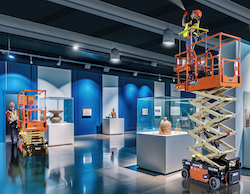
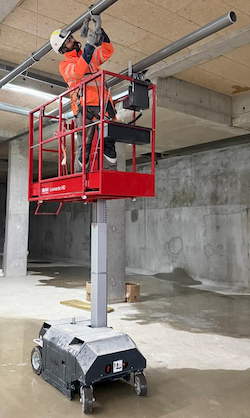
Demand is being driven by the need to work in increasingly confined, weight-sensitive and operationally restricted environments. Micro-sized models typically have machine widths of 32 inches or less, allowing them to pass through standard doorways, navigate narrow corridors and fit into elevators. |
 |
|
Compact access platforms can achieve high utilization rates because they serve multiple industries and applications. A machine that can be used for maintenance, installation, construction finishing and renovation projects creates more rental opportunities and reduces downtime within the fleet. |
 |
|
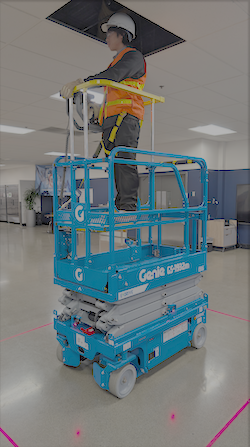
Job sites are driving demand for accessories that enhance operator awareness, like Lift Guard Zone Lighting, which creates a visual perimeter around the scissor lift’s work zone. |
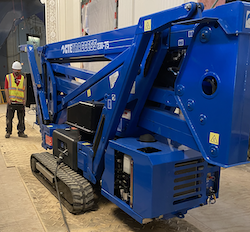 |
| While electric scissor lifts remain the most common indoor MEWP rental equipment, compact spider lifts have seen significant growth in North America over the past few years. As awareness of these lifts continues to increase, more contractors and companies are choosing to rent rather than purchase them. |
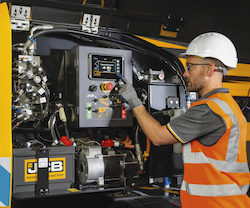 |
| Features that make routine inspections and service easier can help technicians get machines back into the field more quickly, while onboard diagnostics can help identify issues before they become larger, costly repairs. |
 |
| Understanding customer demand and stocking the equipment types most frequently requested helps increase utilization rates and accelerate ROI. |
 |
|
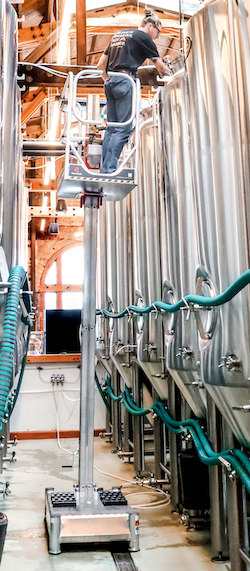
The ReechCraft PowerLift has modular components and compact footprint. Its can be transported through standard doorways and assembled on site, bringing powered access to areas where conventional scaffolding is inefficient and larger MEWPs are impractical.
|
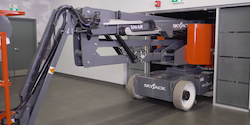 |
| The Skyjack SJ45 ARJN represents one of the few machines in this class to offer a rotating jib, which provides horizontal movement to allow precise positioning of the platform and increased productivity. These narrow machines can move through double standard doors. |
Electric slab scissor lifts remain a popular choice for indoor work because they are designed for firm, level surfaces and can support a wide range of construction, remodeling and facility maintenance tasks. Within this category, micro-sized scissor lifts are experiencing particularly strong growth. These compact, electric-powered machines are now among the fastest-growing segments in the access equipment market.
Demand is being driven by the need to work in increasingly confined, weight-sensitive and operationally restricted environments. Micro-sized models typically have machine widths of 32 inches or less, allowing them to pass through standard doorways, navigate narrow corridors and fit into elevators. Their lightweight designs also make them suitable for suspended, raised or otherwise sensitive flooring.
Electricians, HVAC technicians, painters, plumbers, fire suppression specialists, IT contractors and facility maintenance teams are increasingly using micro-sized lifts for work that may previously have relied on ladders, scaffolding or push-around platforms.
Rental centers should pay particular attention to growth in data centers, schools and universities, hospitals, laboratories, clean rooms, airports, museums, hotels, casinos, libraries, offices and other commercial facilities. These environments often require equipment that operates quietly, produces zero emissions and minimizes the risk of fluid leaks or damage to finished surfaces. As buildings become taller, floor plans become more compact and contractors need access equipment that can maneuver through congested spaces.
Because micro-sized scissor lifts can support construction, fit-out and ongoing facility maintenance applications, they also offer rental centers an opportunity to reach customers who may not traditionally rent larger access equipment. Their ability to work in both indoor and certain outdoor applications can help generate demand throughout the year rather than limiting utilization to a particular construction season.
Rental centers can improve ROI by selecting versatile machines that are suitable for multiple applications and customer types. Compact and micro-sized scissor lifts can be used for drywall, painting, plumbing, electrical work, HVAC installation, cleaning, signage, IT infrastructure, fire suppression and general facility maintenance, making them adaptable additions to a rental fleet.
When evaluating units, rental businesses should compare equipment specifications, machine footprint and duty cycles. Platform height, platform capacity, indoor and outdoor ratings and occupant ratings help determine the range of applications a machine can support. Machine width, gross vehicle weight, ground-bearing pressure and turning radius influence where the unit can be used and how easily it can move on a job site.
Drive-system design can also influence lifecycle costs. Electric-drive systems generally use fewer components than hydraulic-drive systems and can significantly reduce the number of potential leak points. Leak-containment systems can help protect sensitive flooring.
Maintenance practices are equally important. Batteries are among the most frequent and highest-cost service items on electric scissor lifts. Proper cleaning, charging, watering and testing can help extend battery life and reduce premature replacement. Advanced battery monitoring systems can provide information about state of charge, battery usage, fluid levels and charging history, supporting more proactive maintenance and helping reduce unplanned downtime.
Rental centers should also consider connectivity, remote diagnostics and fleet management capabilities. Access to machine and battery information can help service teams identify issues sooner, plan maintenance more efficiently and keep machines rental-ready. Ultimately, the greatest ROI comes from matching the machine to customer demand, selecting equipment that can serve a broad application range and following the manufacturer’s inspection and maintenance requirements throughout the machine’s lifecycle.
Safe and productive indoor MEWP operation begins with selecting the correct machine for the work. Before renting or operating a unit, users should understand the required working height, platform capacity, number of occupants, materials and tools being elevated, platform-size requirements, available space, doorway and elevator dimensions, floor conditions, charging availability, expected runtime and any noise, emissions or environmental restrictions.
Slab scissor lifts are intended for use on firm, flat and level surfaces. Operators must understand the machine’s indoor and outdoor ratings, allowable occupants, platform capacity and operating limitations. They should also review available technologies and options, such as full drive-at-height capability, variable tilt functionality, battery monitoring, leak containment and application-specific accessories. These features can improve efficiency when they are appropriate for the task, but they do not replace proper training or adherence to the manufacturer’s instructions.
Every day and each shift should begin with a pre-start inspection and function test. Walkaround inspections should also be conducted when a new operator takes control of the machine. Inspections typically include checking for leaks, visible damage, cracked welds, missing or damaged components, legible decals and placards, properly functioning gates and guardrails, correct fluid levels, tire and wheel condition and the presence of required manuals.
A function test should be completed in an area free of overhead and ground-level obstructions. Steering, brakes, emergency controls, horns, gauges, lights, alarms and other operating systems should be tested. If any component is damaged, missing or not functioning correctly, the lift should not be used until it has been repaired.
Battery condition should be monitored closely to prevent lost productivity during the workday. Rental centers and operators should confirm that batteries are properly charged and maintained and that the planned duty cycle accounts for available charging time. Advanced battery-monitoring capabilities can help provide more accurate information about remaining charge and battery-system condition.
Finally, operators must be properly trained and must follow the machine’s operator’s manual, service and maintenance manual, applicable regulations and job site requirements. Consistent inspections, preventive maintenance and early correction of small issues can help lower repair costs, reduce downtime and support both operator confidence and profitable fleet operation. •
 |
|
PIERINO BRAVI |
Low level lifts gaining acceptance
The market is showing growing demand for access solutions designed for low-level applications. These machines are increasingly used in sectors such as industrial maintenance, logistics, retail, electrical installations, HVAC and interior finishing.
A major opportunity for rental companies comes from the lifecycle of buildings. Beyond the initial construction phase, industrial facilities, warehouses, commercial buildings and residential properties require continuous maintenance, installation and upgrade activities, creating recurring demand for compact access equipment.
The residential sector is an interesting emerging market. Renovation projects and new multi-story residential developments are increasing the need for equipment that can operate efficiently in limited spaces and in environments where traditional access methods, such as ladders or scaffolding, are less effective.
The new Residential 170 from Bravi Platforms was developed specifically for these applications: a compact platform designed for residential and low-height work, combining a reduced footprint with practical functionality. Its dual travel system, with both electric and manual movement modes, gives operators greater flexibility when moving the machine in different working conditions.
Maximizing ROI means looking beyond the initial purchase price and evaluating the overall value generated by the machine throughout its working life. Compact access platforms can achieve high utilization rates because they serve multiple industries and applications. A machine that can be used for maintenance, installation, construction finishing and renovation projects creates more rental opportunities and reduces downtime within the fleet.
Key factors influencing profitability include reliability, low maintenance requirements, spare parts availability, long service life and residual value. For rental companies, choosing equipment that is easy to manage, simple to operate and suitable for a wide range of applications helps increase fleet efficiency and improve the return on investment.
Safety starts with selecting the right machine for the specific application. For many low-level access tasks, relying on ladders or temporary access solutions can limit productivity and create unnecessary risks for operators.
Compact platforms provide a more stable and ergonomic working position, helping operators perform repetitive tasks more efficiently while improving overall working conditions. Proper operator training, pre-use inspections and correct equipment selection remain essential elements for safe and profitable operation. •
 |
|
CHRIS COLLINS |
Spider lifts gain momentum
While electric scissor lifts remain the most common indoor MEWP rental equipment, compact spider lifts have seen significant growth in North America over the past few years. As awareness of these lifts increases, more users are choosing to rent rather than purchase them. For many users, utilization isn’t high enough to justify ownership, making rental the ideal solution.
There is growing demand for spider lift rentals across many industries, such as municipalities, colleges and universities and other public organizations. Electric or bi-energy spider lifts are versatile enough to be used for everything from indoor maintenance to tree work, making them valuable tools for many departments.
Another emerging market is the construction industry, specifically historic restoration. Contractors working in churches, museums and other historic buildings need high-performing equipment that can fit through a standard doorway while exerting low ground pressure to protect sensitive flooring. Spider lifts are ideal for these environments, making them an excellent rental option for companies that only need this equipment for specialized projects.
Compact dual-energy spider lifts provide excellent return on investment because they can be used across a wide range of applications while filling a niche that traditional MEWPs cannot. Their narrow tracks allow them to fit through a standard doorway, while their low ground pressure, compact footprint and extensive outreach make them suitable for jobs both inside and outside.
These lifts are well-suited for common jobs like tree care, window washing and painting, but they also excel in limited-access areas where other equipment simply won’t work. Examples include projects that require climbing stairs, reaching over obstacles such as swimming pools or atriums, or working on delicate flooring.
Because larger spider lifts are still relatively uncommon in many rental fleets, rental houses can often charge a premium rental rate while differentiating themselves from competitors. Pairing the equipment with proper familiarization and operator training leads to smoother rentals, fewer service issues and greater customer satisfaction, further maximizing ROI.
The most successful rental companies invest in product knowledge. Employees who are thoroughly trained on the equipment allows them to properly familiarize the customer before the rental begins and support them throughout the rental period if needed. When operators understand the machine’s capabilities and its limitations, they’re better equipped to work safely, reduce the risk of equipment damage or downtime and complete jobs more efficiently. •
 |
|
Global Product Director Scissors & Verticals |
Education and accessories extend reach
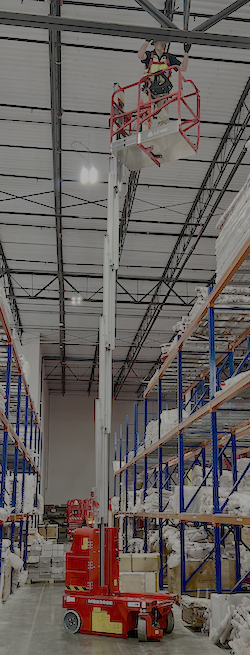
Construction and maintenance of data centers and semiconductor fabrication factories are driving demand for indoor MEWPs that can navigate tight indoor environments efficiently and safely. For this reason, the most in-demand units are micro scissors and vertical mast lifts, including the Genie GS-1432m and GS-1932m micro scissors, and Genie GR vertical mast lifts. These machines are well suited for these applications because of their compact footprint, tight turning radius and ability to work efficiently in congested indoor environments.
Many of the same equipment requirements apply across data centers, semiconductor fabrication facilities, warehouses and manufacturing environments.
These job sites are looking not only at the machine itself, but options and accessories as well, which is driving demand for accessories that enable safe productivity. For example, accessories like Genie’s new Lift Tools Integrated Access Deck, which allows operators to work efficiently in overhead spaces, is common in data centers, warehouses and manufacturing environments. These types of job sites are also driving demand for accessories that enhance operator awareness, like Lift Guard Zone Lighting, which creates a visual perimeter around the scissor lift’s work zone. Lift Guard Sense, a proximity-sensing system designed to help contractors reduce risk while working near overhead hazards such as steel, ductwork, piping and structural elements.
Maximizing ROI starts with keeping machines in service and available for rent. Reliable equipment that requires less maintenance and fewer parts replacements help maximize utilization, which boosts ROI over the life of the machine.
Equipment owners can also leverage digital tools to increase ROI. For example, the myGenieLift portal, a central access point for Genie digital tools, now includes My Fleet, which gives fleet managers an at-a-glance overview of machine health, including any machines that need service. The Genie Assist AI-powered chat agent helps technicians find information faster by drawing from operator manuals, service manuals, parts information, fault code libraries and historical technical support records.
As with ROI, ensuring a safe and profitable operation starts with ensuring you have a quality machine that is easy to operate and won’t break down on the job site. Features such as AC drive motors, efficient battery systems and hydraulic oil containment solutions help support productivity, reliability and job meet site requirements. High-efficiency batteries that can work a full workday without needing to be recharged improve productivity and, as a result, profitability. •
 |
| CONNOR STANMORE Product Manager, Lifts JCB |
Indoor and outdoor work
Electric scissor lifts continue to be the most requested indoor MEWPs because they cover such a wide range of applications. Electric boom lifts are also seeing increased interest because they allow operators to reach up and over obstacles that a scissor lift simply can’t. Couple this with four-wheel drive and a high ground clearance and rental centers have a machine that can successfully work indoors and outdoors.
One specific industry isn’t driving demand; instead, it’s the growing expectation that equipment should be safe, intuitive and ready to work with minimal setup. More rental customers are occasional MEWP users rather than dedicated operators, so they’re looking for machines with straightforward controls and safety features that inspire confidence without making the machine more complicated to use.
There has been strong activity in areas like warehouse expansion, manufacturing, healthcare facilities and data centers where indoor access equipment is becoming part of everyday operations. Those jobs often require smaller platform widths and lighter weight machines to operate on mezzanine decks and cable management systems underground.
For rental centers, the biggest opportunity is stocking machines that are versatile enough to serve multiple applications while remaining easy for a wide range of customers to operate. A machine that’s simple to use, dependable and equipped with today’s safety technology is likely to spend more time on rent than one that’s built for only a narrow set of applications.
The biggest contributor to ROI is keeping machines working. Every day a lift is down for an unexpected repair is a day it isn’t generating revenue, so reliability and uptime should be top priorities when building a fleet.
That starts with selecting equipment that’s built to stand up to rental use. Rental machines are operated by different users on different job sites every week, so they’re going to see increased wear over their lifetime. Features that make routine inspections and service easier can help technicians get machines back into the field more quickly, while onboard diagnostics can help identify issues before they become larger, costly repairs.
Maintenance plays a major role in this. Rental centers that stay on top of scheduled service, inspect machines between rentals and address technical information bulletins early typically see longer service life and fewer unexpected breakdowns. It’s much easier to plan maintenance than it is to explain downtime to a customer who needs a machine that morning.
Versatility is important. A lift that can handle a variety of indoor and outdoor applications is more likely to stay on rent throughout the year, helping improve utilization over its life. When reliability, serviceability and preventive maintenance come together, rental centers put themselves in a position to maximize the value of every unit in the fleet.
One of the biggest ways rental centers can support safe and profitable operation is by helping customers select the right machine before it ever leaves the yard. Taking a few extra minutes to understand the application can prevent issues once the equipment reaches the job site.
For example, a scissor lift may be the right choice if the work primarily requires straight vertical access and additional platform space for people, tools and materials. If operators need to reach up and over ductwork, piping or other obstacles, a boom lift may be the better option. Similarly, if an customer is planning to work both indoors and outdoors, then make sure the machine is specified appropriately. Matching the machine to work helps improve productivity while reducing the likelihood of customers trying to use equipment outside its intended capabilities.
Rental centers can also add value by making sure customers understand the basic operation and key safety features of the machine they’re renting. A brief walkaround of the controls and a review of the machine’s capabilities can help build operator confidence and reduce unnecessary support calls.
Finally, maintaining a fleet that’s clean, inspected and ready to rent is important. Customers notice equipment that’s well cared for and are properly maintained are more likely to stay productive in the field. •
 |
|
MARK ELTON |
Smaller MEWPs for tighter environments
In terms of volume, electric slab scissor lifts with a 19-foot platform height remain the most widely used and requested MEWPs in rental fleets. Their popularity comes from their versatility and ability to provide access to elevated work areas of up to approximately two stories in commercial and industrial buildings. For many rental customers, the LGMG S1932E slab scissor lift has become the standard machine for indoor access work because it offers the right combination of working height, simplicity and familiarity.
While traditional slab scissor lifts continue to lead overall demand, some of the fastest-growing segments are more compact machines, particularly micro scissor lifts and vertical mast lifts. Indoor job sites are becoming increasingly space constrained as warehouses, data centers, semiconductor plants and manufacturing facilities maximize the use of available floor space. This often results in narrower aisles and tighter work environments where larger machines cannot easily be maneuvered.
Vertical mast lifts are gaining traction because they offer a safer alternative to ladders for routine maintenance while occupying a minimal footprint are easy to transport and store. They are well-suited for applications where a single operator needs to work at height in confined spaces, such as light repairs, electrical maintenance or inspections. For example, there has been growing interest in the LGMG M2530SE, which combines one of the highest platform heights in its class (25 feet) with an exceptionally compact footprint, allowing operators to access elevated work areas while maneuvering efficiently in constrained indoor spaces.
The continued expansion of data centers, warehousing operations and advanced manufacturing facilities are driving demand for electric MEWPs. These environments require zero-emission equipment that can operate indoors while maintaining clean, quiet and productive workplaces.
Maximizing uptime is one of the most important factors in achieving a strong return on investment. Equipment only generates revenue when on rent, so rental companies must pay close attention to machine quality, maintenance requirements and the level of support available to keep equipment up and running. Fleet owners see the greatest returns from machines that are reliable, easy to maintain and quick to get back to work when issues arise. Choosing equipment from manufacturers that offer responsive support, readily available parts and straightforward service procedures can reduce downtime and increase revenue.
Rental companies should also focus on selecting the right mix of machines for their local markets. Understanding customer demand and stocking the equipment types most frequently requested helps increase utilization rates and accelerate ROI.
A versatile fleet creates more rental opportunities, reducing the need to invest in niche equipment. Machines that can handle a wide range of applications allow rental companies to serve more customers and accelerate ROI. A good example is the LGMG A43JE electric articulating boom lift. It features a narrower footprint than a traditional 45-foot electric articulating boom while delivering similar reach, allowing it to offer more flexibility on the job site and serve more applications.
One of the most significant trends is the use of telematics to improve equipment uptime and performance. Telematics solutions can improve troubleshooting as they provide clear, text-based fault descriptions instead of relying solely on error codes. •
 |
|
JASON SOLHJEM |
Indoor MEWPs replacing ladders and scaffolds
While the 19-foot scissor lift is still popular for many new construction trades, the indoor market is expanding to machines that are more compact and maneuverable. Featuring smaller footprints and lighter weights, micro scissor lifts and small vertical mast MEWPs are easier to navigate in tight spaces, helping reduce the risk of damage or injury while being gentler on sensitive floors. As users continue to migrate away from the safety risks of ladders and limitations of fixed-height push-around scaffolding, these highly ergonomic lifts are showing up in a broad range of facilities and use cases. While newer markets like data centers have increased recent demand for these smaller lifts, the main business driver continues to be the shift in safety culture as companies move away from ladder and scaffold access in favor of safer, more ergonomic and efficient powered lifts.
The ReechCraft PowerLift is a good example with its safety-focused design, modular components and compact footprint. Its can be transported through standard doorways and assembled on site, allowing contractors to bring powered access to areas where conventional scaffolding is inefficient and larger MEWPs are impractical.
Achieving higher ROI goes hand in hand with raising your value to the customer. Don’t wait for them to come asking for a solution but rather anticipate what they’ll need and plant seeds for future projects. Sell them on the opportunities, and they will come back when the time is right. Key in on being predictably solution-focused and timely, and charge accordingly.
Carrying versatile solutions such as the PowerLift allows rental centers to serve a broader range of applications with one piece of equipment. Because the system can be configured to meet a variety of job site requirements, it creates opportunities to maximize utilization while differentiating your rental fleet from competitors.
To assure safe and profitable operation, keep all labels and safety features in fantastic condition. This demonstrates that you truly value your customers’ experience and safety, and that you take pride in what you have to offer them. Take the extra time to provide safety guidance and usage information before the machine goes out the door and do a quick debrief when they come back. Ensuring operators understand proper assembly, operation and best practices can improve safety outcomes and customer satisfaction while reducing the risk of equipment damage. Finally, consider following up with a survey and reward participation with a small discount on a future rental to encourage feedback and build loyalty. •
 |
|
COREY CONNOLLY |
Get up-and-over access with boom lifts
The new compact, zero emission, low noise Skyjack SJ45 AJN and SJ45 ARJN battery-powered electric slab booms feature a working height starting at 50 feet 11 inches and have been designed to offer superior performance across indoor and outdoor job sites.
With a platform capacity of 500 pounds, a 4-foot 8-inch jib as standard equipment, and with a narrow width of 4 feet 11 inches, the SJ45 AJN provides class-leading up-and-over access capability of 25 feet 7 inches. This new slab boom is narrower than most competitors in the class and offers outstanding onsite maneuverability and precision to work in confined spaces.
The SJ45 ARJN represents one of the few machines in this class to offer a rotating jib that allows precise positioning of the platform and increased productivity. These narrow machines can access through double standard doors, offer a low stowed-height of 6 feet 6inches and have a weight under 16,000 pounds.
The SJ3232 E electric drive scissor lift represents the newest model in Skyjack’s range of slab scissors. Suitable for indoor and outdoor use, the narrow width, machine length of only 91.6 inches, 550-pound capacity and low machine weight of just 5,850 pounds make it ideal when both height and compact performance are needed. No stabilizers mean the SJ3232 E is drivable at full its full working height of 37 feet 6 inches. These machines provide a clean, quiet, sustainable rental solution with zero emissions, low operating costs and increased utilization.
The new SJ5545 E electric drive scissor lift represents the highest working height scissor in Skyjack’s range of slab scissors and includes innovative design features, high platform capacities, and a clean, quiet, sustainable rental solution. With a working height of 51 feet and a load capacity of 770 pounds, this E-Drive model features exceptionally responsive control and maneuverability. Its scissor stack design features fully welded cross-bracing that increases rigidity and improves operator comfort at height. This scissor is drivable at full height, offers a two-person wind-rating at 22 feet and provides the largest working areas in its class with only 2.5-inch clearance over the side of platform to the outside of the base.
Skyjack is well-known to provide quality engineered, simple and reliable machines globally so that companies can maximize utilization and their ROI. Skyjack MEWPs are designed to be easy to service and maintain. By keeping the design simple, and using proven technology, reliability and ease of service is common to all Skyjack products. Because of this, Skyjack machines offer the rental industry’s best lifecycle value through low cost of ownership and ease of service and maintenance, all while retaining high residual values.
The popularity of Skyjack’s MEWPs continues to climb as more organizations are reaching for quiet, compact, and maneuverable access equipment.
This article originally appeared in the September-October 2026 issue of Pro Contractor Rentals magazine. ©2026 Urbain Communications LLC. All rights reserved.

PRO CONTRACTOR RENTALS MAGAZINE
Pro Contractor Rentals provides information of value to rental centers who focus time, resources and attention on meeting the demands of construction contractors and other equipment rental customers.