

Equipment Insight: Telescopic handlers
First on and last off the job site, they complete a variety of jobs.
|
RANDI BAKALAR |
Units fill capability gap
 |
|
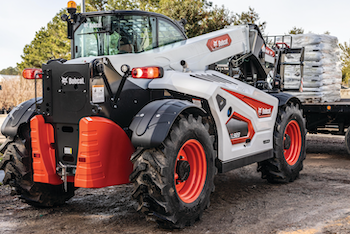
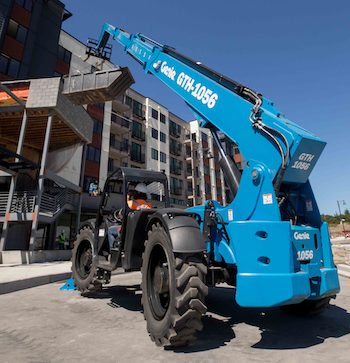
Because telehandlers are often rented to address a specific project requirement, they can create revenue opportunities that may not exist with equipment customers already have in their fleet. When a job requires additional lift height, forward reach or material placement capability, a telehandler is often brought in to help complete that work. |
 |
|
Pick-and-carry models serve customers that need to transport and place materials efficiently without outriggers, while pick-and-place models provide additional reach and stabilization for applications requiring it. |
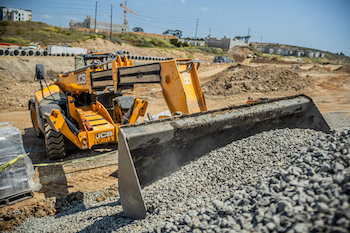 |
| A telehandler that handles multiple attachments can move beyond traditional pick-and-place work into loading, material handling and, with properly equipped models, ground-engaging applications. |
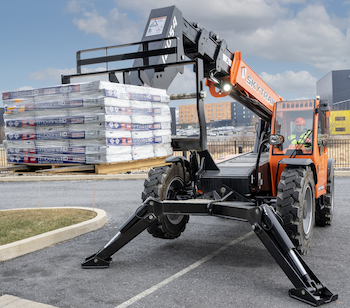 |
| Because telehandlers can extend materials away from the vehicle with the telescoping boom, knowing the weight and center of gravity of the material being lifted is important. There is no substitute for knowing the weight and center of gravity of the load and making sure the movement can be performed within the machine’s rated capability. |
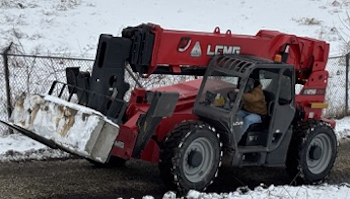 |
| Another key concern for rental companies is long-term durability. Telehandlers often operate in harsh environments, handling heavy loads, traversing rough terrain and working in demanding construction applications. |
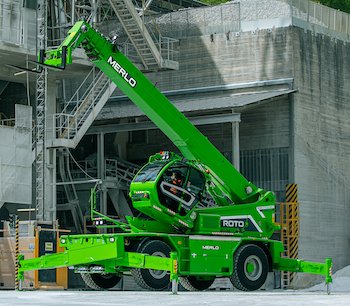 |
| Merlo America shines in providing a better operator experience in both safety and comfort, with fully enclosed cabs, standard HVAC systems, and the Adaptive Stability Control System to reduce tipping risks and unsafe maneuvers. |
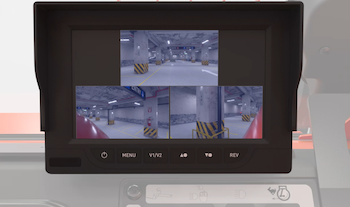 |
| Skyjack launched the Multi-View camera and sensor system, which incorporates two additional cameras and a tri-view monitor display to enhance blind spot visibility and awareness. The full-color monitor allows the operator to toggle between individual views of the left, right, and rear of the machine, or simultaneously display all three views, providing 220 degrees of visibility |
Rental fleet managers typically evaluate telehandlers based on utilization potential, customer demand and how the machine complements existing fleet assets. Common questions center on which customer segments the machine can serve, whether demand can support the investment, what maintenance requirements can be expected and how easily the machine can be integrated into rental operations. Attachment compatibility, transportability and dealer support are also important factors when evaluating a machine’s rental potential.
One of the first questions rental centers may ask is whether a telehandler fills a capability gap or overlaps with equipment already in the fleet. Telehandlers offer a combination of lift height, forward reach and material placement capabilities that many other equipment types cannot provide. Contractors often rely on them when materials need to be moved and placed where forklifts may be less effective, particularly on active job sites and challenging terrain.
Rental centers also evaluate how frequently customers need materials moved and placed at height. Demand from construction, agriculture, landscaping and material handling can support utilization across many customer segments.
ROI is often evaluated through utilization, rental rates, serviceability and long-term ownership costs rather than purchase price alone. Telehandlers are frequently rented for jobs that require lifting, moving and placing materials where reach and height are critical. For many customers, renting a telehandler provides access to capabilities they don’t already have in their fleet.
Because telehandlers are often rented to address a specific requirement, they can create revenue opportunities that may not exist with equipment customers already have in their fleet. When a job requires additional lift height, forward reach or material placement capability, a telehandler is often brought in to help complete that work.
From a fleet perspective, telehandlers can complement compact loaders rather than compete with them. Loaders are commonly used for grading, digging and material movement, and telehandlers are selected when projects require additional reach and material placement capability. This allows rental centers to expand the range of applications and maximize the utilization potential of the fleet.
Telehandler performance begins with understanding the work at hand. Evaluating load requirements, placement locations, attachment needs and job site conditions helps ensure the machine is matched best to the application.
Operator awareness is equally important. Understanding machine controls, load-handling, attachment functionality and machine limitations helps operators make informed decisions.
Job site conditions can significantly affect productivity. Ground conditions, available workspace, material characteristics and attachment selection all influence how effectively a telehandler can perform. When matched properly to the application, a telehandler can improve material flow and reduce unnecessary material handling across the job site.
Telehandlers continue to evolve with improvements to hydraulics, controls and overall machine design. Features such as multiple steering modes, quick-attach systems and more intuitive operator interfaces can make these machines easier to operate and more productive on the job site. With the growing range of available attachments, telehandlers can also take on more material-handling tasks when the machine, attachment and application are properly matched. •
 |
|
KYLE HOLDRIDGE |
ROI drives telehandler selection
ROI is usually the first consideration in selecting a telehandler model. Decision makers need to understand the capacities, reach requirements and applications that drive demand in their market. Other frequent considerations include usability, operator familiarity, serviceability and product support. Can someone operate the machine comfortably for eight to 10 hours? Will customers recognize the controls and operating characteristics? Can the rental center efficiently maintain multiple models?
Genie addresses those concerns with a broad telehandler line covering the major capacity classes, including 44-foot and 56-foot reach options. Pick-and-carry models serve customers who need to transport and place materials efficiently without outriggers, while pick-and-place models provide the reach and stability for applications requiring it. Consistent cab layouts and operating characteristics help create a familiar experience for operators moving between models.
Asking customers how they will use the machine helps the rental center provide enough capacity and reach without adding cost and complexity the application does not require.
Telehandlers generate ROI through a combination of versatility, rental duration, serviceability, useful life and resale value. With manufacturer-approved attachments, one machine can move and place materials, handle suspended loads, support repetitive pick-and-place work or perform certain loader-type tasks. That versatility means a telehandler may be one of the first machines on a project and one of the last to leave.
For Genie telehandler owners, component commonality further strengthens the calculation. Models within the size group use common engines, transmissions and axles, along with the same engine positioning and hydraulic and engine filters. Similarly, These models share the same axle, drivetrain, transmission and engine configurations. Rental companies can stock fewer service parts and technicians familiar with one model can readily service others.
Selecting between pick-and-carry and pick-and-place models also affects ROI. If the customer does not need outriggers or the additional reach of a 56-foot model, placing a 44-foot pick-and-carry unit might improve ROI by approximately 15 percent. The key is matching the machine to the work rather than automatically supplying more machine than the application requires.
Genie’s Lift Connect telematics tell rental teams location, hours and fault codes so they can schedule preventive maintenance and inspections while a machine is deployed.
One of the more interesting industry trends is the growing population of highly skilled telehandler operators, particularly on mega projects such as data centers and large renewable-energy installations. Compressed schedules make every cycle important and experienced operators want responsive, multifunction controls that allow them to drive, raise or extend the boom and adjust fork position in a coordinated sequence. That is pushing manufacturers to look beyond basic machine capability and refine hydraulic response, cycle times and two- or three-function performance.
Safety expectations are evolving alongside performance demands, especially in higher-capacity classes. Today, telehandlers commonly use tools such as backup cameras, load-monitoring systems and load-moment indicators to help operators work safely and efficiently. In the future, look for more advanced object-detection and operator-assistance technologies, which have the potential to help operators identify obstacles, improve situational awareness and support safer material handling on increasingly congested job sites. •
 |
|
BEN MANSFIELD |
One machine, many jobs
Rental center decision makers typically ask a few practical questions about telehandlers: How much maintenance will it require? Can different customers operate it easily? And does it offer enough versatility to serve multiple applications? Each question ultimately affects utilization, uptime and return on investment.
Start with versatility. Rental centers need machines that appeal to more than one type of contractor. A telehandler that handles multiple attachments can move beyond traditional pick-and-place work into loading, material handling and, with properly equipped models, ground-engaging applications. That broader capability gives rental centers more opportunities to match one machine with different customers and jobs.
Maintenance also matters. Every hour in the shop represents time the machine cannot generate rental revenue. Rental centers should prioritize telehandlers with easy service access, grouped maintenance points and designs that simplify daily checks. Telematics can help fleet managers remotely track hours, monitor machine location and schedule service before maintenance disrupts a rental.
Rental centers also need to consider the operator experience. Customers have different skill levels, so intuitive controls, strong visibility and familiar interfaces matter. Simple operation can speed machine handoffs, build operator confidence and reduce support calls.
The best way to address these concerns is to evaluate a telehandler as a rental asset, not simply as a lifting machine. Look at its application range, service requirements, ease of use and potential utilization. Thy all determine how effectively the machine earns its place in the fleet.
Telehandlers can pencil out well for rental centers because they occupy a distinct position in the fleet. They provide lift capacity and reach that compact equipment cannot match, while covering applications across residential and commercial construction, infrastructure, industrial work and agriculture. That breadth gives rental centers opportunities to generate revenue across different customer segments and project types.
The key is selecting the right mix rather than treating telehandlers as a single equipment category. Compact units can open rental opportunities on tight residential, landscaping and urban job sites where maneuverability matter. Mid-range machines address traditional construction and material placement, while high-capacity models support infrastructure and industrial projects that require heavier lifts and greater reach. Rotating telehandlers add another option for specialized, high-reach work. A rental center can build its fleet around the demand it actually sees in its market.
Attachment strategy can further strengthen the economics. Instead of viewing forks as the end of the conversation, rental centers can pair telehandlers with attachments that create rental opportunities and potentially increase revenue from the same machine.
Ultimately, ROI comes from matching fleet investment to demand. Rental centers that understand which capacities, lift heights and configurations their customers need can position telehandlers to fill specific fleet gaps rather than compete directly with equipment they already own.
JCB invented the telehandler in 1977, and nearly 50 years of developing these machines has shown that getting the best performance starts with understanding how the machine behaves as the load, attachment and job site conditions change. Rental centers can put that experience into practice by making customer education part of every telehandler handoff. Rental staff should show customers where to find the load chart and explain how lift height, forward reach and attachment choice affect capacity. A machine that handles a load easily with the boom retracted may have very different capacity when the operator raises or extends that load. The same is true for when the stabilizer legs are deployed vs. when lifting only on the wheels.
Next, walk through the switches, controls and visibility features. Keep it practical. Explain what operators should watch for and reinforce the need to assess slopes, mud, loose material and changing ground conditions before positioning the machine or making a lift.
Attachments deserve their own conversation. Confirm that customers have the right attachment for the work, understand how to secure it and know how that attachment affects lifting limits.
Rental centers should also use the return inspection as a learning opportunity. Ask how the machine performed and check tires, hydraulic connections, attachment interfaces and boom components. That two-way conversation can help rental teams identify customer needs while preparing the machine for its next rental. •
 |
|
JOHN BOEHME |
Versatility affects total cost of ownership
With telehandlers available in a wide range of sizes, capacities and configurations, one of the first considerations is selecting the right machine for the work. Start by asking three basic questions: How heavy is the load? What height does it need to reach? What forward reach is needed? Then compare those requirements to the telehandler’s load chart to determine which machine meets the job site’s specific requirements.
Versatility is another important consideration. Telehandlers can perform many different tasks on job sites. This flexibility means telehandlers are often one of the most highly utilized machines on a job site.
Technology is changing how equipment is managed. Connected equipment can provide valuable data throughout the workday for decision-making and planning. For rental companies, connectivity can help improve fleet utilization, maintenance, serviceability and uptime.
Rental centers are focused on return on investment in terms of initial acquisition cost and also the total cost of the product over its lifetime. Rental centers are paying attention to the versatility of each piece of equipment and the productivity gains telehandlers can provide.
Versatility is an important part of that equation. Telehandlers can support many different tasks, and attachments can further expand what a machine can do. Fork-mounted, coupler-mounted and permanent-mounted attachments allow telehandlers to take on a variety of applications just by changing the attachment.
Connectivity can also help rental companies improve fleet utilization, maintenance, serviceability and uptime. Equipment owners and rental companies continue to focus on total cost of ownership, including equipment that improves utilization, simplifies serviceability, supports more applications through attachments and provides actionable fleet intelligence for decision-making.
In certain applications, telehandlers can also perform work traditionally handled by other types of equipment. When properly equipped, telehandlers can perform hoisting and material-handling tasks. Because telehandlers are purpose-built to move heavy objects with maneuverability, using a telehandler for this type of work can be more cost-effective than bringing in a crane.
Operator training and understanding the machine’s capabilities are important parts of telehandler operation. Training includes formal instruction, practical training and evaluation of the operator’s performance in the workplace. Topics include controls and instrumentation; steering and maneuvering; visibility; attachment operation and limitations; vehicle capacity and stability; inspections and maintenance; surface conditions and load handling. Operators also need to understand the load they are handling. There is no substitute for knowing the weight and center of gravity of the load and making sure the movement can be performed safely by the machine.
Pre-operation inspections are another important consideration. These inspections should be performed at the beginning of each work shift or whenever there is a change in operator. Following the manufacturer’s Operation and Safety Manual, operators should inspect the machine and its components. Educating operators to complete these checks can also help prevent unplanned downtime.
Job site conditions need to be considered as well. Operators should understand the load capacity charts for the machine and attachment and make sure the telehandler does not exceed its rated lift capacity. They need to make sure the ground can support the machine and remain aware of holes, obstructions, drop-offs, debris and other potential hazards. Proper tire pressure and leveling the machine before raising the boom are also important considerations.
Technology can provide additional operator aids. For example, JLG’s Load Stability Indication system on select models helps operators remain within the load capability of the telehandler by providing a visual indication of the machine’s forward stability status. These technologies are operator aids and do not replace the operator’s responsibility to understand the load and operate within the machine’s rated capability. •
 |
|
RUSSELL DURAND |
Pay attention to DEF needs, maintenance costs
One of the most common questions we hear is whether LGMG offers telehandlers with a non-DEF (Diesel Exhaust Fluid) engine package. For many rental companies, minimizing downtime and simplifying fleet management are top priorities. DEF systems require operators to monitor fluid levels and keep the DEF tank filled; if neglected, the machine can experience performance limitations or require service intervention.
For rental businesses that do not require higher-horsepower machines and are looking for simplified operation and ownership, LGMG offers the H1056 telehandler with a 74-horsepower Cummins engine. Because EPA regulations do not require DEF systems on construction equipment powered by engines rated at 74 horsepower or below, this configuration eliminates the need for DEF while helping reduce maintenance complexity and potential downtime.
Another key concern for rental companies is long-term durability. Telehandlers often operate in harsh environments, handling heavy loads, traversing rough terrain and working in demanding construction applications. Rental customers want to know how a machine will stand up to repeated use over its service life. LGMG addresses these concerns by designing telehandlers with robust construction, including heavier-duty chassis and boom structures that help withstand demanding rental applications.
Decision makers are also increasingly focused on maintenance and parts availability. Rental companies appreciate the use of widely available, industry-proven components, including Dana axles and Cummins engines. Because these components are commonly used throughout the industry, parts and service support are more readily available, helping reduce repair delays and ownership costs.
Finally, rental companies look for features that support uptime and ease of operation. LGMG telehandlers come standard with foam-filled tires, reducing tire-related service calls. All LGMG telehandlers also have an integrated onboard information system that provides operators with quick access to diagnostic information and load charts directly on the machine’s display, helping improve efficiency, facilitate troubleshooting and enhance overall machine reliability.
Telehandlers continue to be among the strongest-performing assets in many rental fleets because of their versatility and consistently high utilization rates. On most construction projects, they are among the first pieces of equipment to arrive on site and among the last to leave. Telehandlers perform critical material-handling tasks throughout the construction process, moving loads in environments where conventional warehouse forklifts simply cannot operate.
Early in a project, telehandlers are used to unload trucks delivering rebar for concrete work, utility piping and other construction materials. As the project progresses, they continue moving steel beams, wire reels, HVAC equipment, pallets of supplies and countless other loads around the job site. Even during the final stages of construction, telehandlers remain in use unloading equipment and materials. Their ability to travel over rough terrain while lifting, placing and transporting heavy loads makes them indispensable throughout the entire construction cycle.
That sustained demand translates into strong utilization rates, helping rental companies maximize fleet productivity and increase returns on investment.
Modern telehandlers incorporate technologies that enhance both safety and productivity. Integrated digital load charts and onboard information systems provide operators with immediate access to lifting information and machine diagnostics from the display inside the cab. Rear-view cameras are becoming increasingly common and help improve visibility around the machine. Together, these features help operators make informed decisions, improve situational awareness and maintain safe, efficient operation on the job site. •
 |
|
STEVEN KISKUNAS |
Solid ROI from telehandlers
Rental center decision makers often have concerns about the upfront cost of telehandlers, since it is higher than other pieces of equipment. However, these are excellent machines to add to inventory due to their long service life. A well-maintained telehandler can easily last for 20 years – with a typically payback period of four to five years, depending on the machine – making it a cash generating product in the rental fleet.
Some rental center decision makers may also have concerns about what the equipment utilization may be. Given the shift toward rental vs. ownership in recent years, rental centers can be confident that this is appealing to contractors. Most contractors incorporate the cost of the machine rental into the project bid, so the rental is an operating expense as opposed to a capital expenditure.
Rental puts the onus of maintenance of the telehandler on the rental center. Telehandler maintenance may be a concern to rental center decision makers, but it is a minor expense compared to the profit to be gained from having this equipment in their fleet.
The real strength in having a telehandler in the rental fleet is the solid ROI. A telehandler may cost roughly twice as much as a skid steer and have a longer payoff period; however, the profit it can generate in the long term is much higher. This equipment lasts longer and commands a higher rental rate, leading to greater cash flow every time it is rented. In many cases, telehandlers can set the foundation for success for rental centers since this fleet generates a significant sum of money for them, taking them from a medium-level rental company to a high-level rental company.
Rental centers can further increase their ROI by purchasing the most durable telehandler tires. Solid tires may cost more upfront; however, they last longer and require significantly less maintenance or replacements than air- or foam-filled tires.
Additionally, rental centers can extend their telehandler rental period by investing in attachments such as a standard carriage and fork, bucket hopper or snow blade. These attachments increase the versatility of the machine, making it a key piece of equipment for contractors to use for more tasks on the job site.
Safety is the number one consideration when renting a telehandler. Contractors and their crew must have the proper training and certification, per OSHA requirements under Standard 29 CFR 1910.178. Rental centers that help with certification provide a value-added service is appealing to many contractors.
Investing in a telehandler model with features that make it easy for a rental customer to use also adds value to the investment. Models that provide in-cab, on-screen prompts about the correct operation of the machine which can include alerts about the boom, parking brake and more. Backup cameras and radar on telehandlers can help renters operate safely.
Telematics can also be an advantage for rental centers by allowing them to locate their rental equipment and track maintenance needs.
In the future, investing in electric telehandlers may be an additional means for rental centers to generate a greater profit as contractors look to create more sustainable job sites. •
 |
|
JACOB SHERMAN |
Parts and service availability drive selection
One of the most common questions Merlo representatives hear from rental teams centers is about how well a machine is suited to a job site or application. Considerations such as how many functions or solutions one machine can provide are vital to maintaining a higher rental usage rate, as they allow one machine to be used in various applications, thereby increasing demand for the unit. A secondary concern is the availability of parts and service support to address remote machine downtime.
Merlo’s expansive attachment portfolio is a major driver in fleet utilization on rental lots. When paired with the attachment recognition system, rental centers can offer greater versatility in solving customer application needs while supporting safer operations with Merlo attachments. Merlo America helps rental centers maximize uptime by providing support to end-users and rental centers alike via an expansive parts warehouse located in South Carolina. Additionally, Merlo offers direct shipping to the specific job site for parts and support that require expedited delivery.
Telehandlers are routinely the first machine to arrive at a job site and the last to leave, resulting in longer lease terms than machines with a narrower scope of use. The flexibility of a telehandler to be used efficiently for a multitude of tasks, rather than as a niche application, enables longer rental terms and creates demand for a variety of complementary revenue-generating attachments.
For a rental center, the best machine is one that spends as little time as possible on the rental lot. When you look at the various telehandler attachments from more standard set-ups like forks and platforms to more unique tools such as Merlo’s Tire Handler attachment, renters start to see the various customer applications, possible attachment rentals and ROI potential available with a telehandler.
The business case for a customer choosing to rent a machine rather than buy it centers on efficiency and cost-benefit analysis. One of the strongest cases a rental center can make for telehandlers is their productivity and the efficiency gained by needing only one chassis to complete many jobs on a site.
Safety is also a major concern on all job sites; liability for accidents and job site shutdowns due to serious accidents creates significant financial repercussions. Providing renters with technology that supports safe operation is essential for rental centers looking to compete for that business. Customers looking to rent equipment understand the financial value and human responsibility of renting a higher-quality machine with appropriate safety features and operator assistance. Merlo America shines in providing a better operator experience in both safety and comfort, with fully enclosed cabs, standard HVAC systems, and the Adaptive Stability Control System to reduce tipping risks and unsafe maneuvers. •
 |
|
KYLE BRUBACHER |
Increasing customer utilization
Skyjack’s TH series telehandlers serve the North American rental industry with machine durability, reliability and longevity. They offer best-in-class serviceability. Proven designs in Skyjack telehandlers offer a variety of features and attachments that increase customer utilization and limit downtime.
Skyjack offers six updated models in the North and South American telehandler series, with lift capacities ranging from 5,500 pounds to 12,000 pounds and lift heights ranging from 19 feet 1 inch to 56 feet 3 inches; maximum forward reach in the series ranges from 11 feet 1 inch to 42 feet 4 inches. These versatile machines support customers as they work at height, move cargo in tight spaces and navigate rough terrain.
With improved gearing and a high-efficiency hydraulics, Skyjack’s 74 horsepower engines deliver the same on-site job performance as higher horsepower units. The series offers Smartorque, which doesn’t require DPF, DEF or other active exhaust aftertreatment. Their Rear Axle Stabilization (RAS) system increases stability and provides job site flexibility with three-mode steering operation.
The Flexcab, which are standard on Skyjack telehandlers, gives fleet operators easy conversion between open and enclosed cabs with simple hand tools. The bolt-on/bolt-off window retention system with flat glass panels ensures minimal ownership costs and downtime.
The yoke-mounted Readyhook found on most TH Series telehandlers allows safe load under-slinging and avoids using forks as an underslung lifting device. Skyjack supports the rental industry with a wide variety of carriages, fork options and additional attachments designed to increase telehandler productivity.
All major service points are easily accessible and a colored and numbered wiring system offers easy troubleshooting and maintenance.
Relay-based control systems allow Skyjack telehandlers to use simpler components, which means less maintenance and lower costs. Customers can monitor machine performance using the in-cab engine multifunction display.
The Elevate Live QR code technology is an easy access point to machine-specific information and service data withany smartphone. Skyjack has worked with customers to identify the most important data points that solve day-to-day service needs and Elevate delivers machine-specific alerts and analysis to reduce service calls and trips to job sites.
The new dual-tilt compensation cylinder design improves load distribution and reliability and the TH series features new greaseless/maintenance-free main bearings, an easier-access ECU, and a new high-pressure filter system and improved hydraulic tank that reduces contamination. The new durable and rental yard-repairable steel engine cowling and new ergonomic seat with improved weather protection.
Skyjack recently launched the Multi-view camera and sensor system, which incorporates two additional cameras and a tri-view monitor display to enhance blind spot visibility and awareness. The monitor can be toggled between individual views of the left, right and rear of the machine, or display all three views, for 220 degrees of visibility. •
 |
|
MIKE COLEMAN |
Evaluate value over machine life
Rental centers considering telehandlers, stat the conversation with purchase price and rental rate. But the questions that determine long-term success go deeper: will the machine rent consistently? How much maintenance will it require? Can staff service it? What will it be worth when we sell it and could rebuilding it deliver another rental cycle?
Rental decision makers want dependable equipment that fits their customers’ applications, transportation capabilities and service resources. A telehandler’s versatility can generate demand across several markets but selecting the right capacity and configuration is essential.
An independent rental center serving smaller contractors may find compact equipment easier to transport and rent. A company supporting major construction projects may benefit from higher-capacity telehandlers that handle heavier materials at greater heights and reach. Some machines can also create opportunities to supply other rental centers through rerental agreements.
Xtreme Manufacturing experts encourage buyers to evaluate the actual load chart with the machine’s nominal capacity. It’s important to know how much it can safely lift at the height and forward reach customers need. That capability helps rental centers to differentiate its fleet and serve applications that some machines can’t accommodate.
Telehandlers can deliver competitive returns, but they do not automatically outperform skid steers, mini excavators or other rental categories. Results depend on local demand, utilization, rental rates, delivery costs, sales coverage and maintenance requirements. A rental center with established relationships, an outside sales team and suitable transportation may be well positioned to build telehandler utilization.
The evaluation should include total ownership cost: acquisition, financing, maintenance, downtime, useful life and residual value. A lower purchase price does not necessarily produce the strongest return. Uptime is particularly important because a machine in the shop incurs repair expenses while losing rental opportunities. Accessible service points, straightforward systems, dependable parts support and durable components all contribute to equipment uptime.
Xtreme’s roller-boom designs emphasize smooth operation and long component life. Serviceability and rebuild-ability are also central to Xtreme’s ownership proposition. For owners who plan beyond a conventional replacement cycle, rebuilding a suitable machine can extend its revenue-producing life at a lower investment. Buyers should compare that option with replacement using realistic rebuild costs, expected reliability and resale assumptions.
Visibility, intuitive controls and smooth load handling also matter. Xtreme emphasizes 360-degree operator visibility and controls that allow one hand to remain on the steering wheel. Roller-boom operation helps operators extend and retract loads smoothly, while wider outrigger stances on equipped models support stability. For suspended-load applications, buyers should confirm that the machine has an approved lifting point and the appropriate load chart. Proper training, inspections, ground assessment, machine positioning and attachment selection remain essential regardless of brand.
This article originally appeared in the November-December 2026 issue of Pro Contractor Rentals magazine. ©2026 Urbain Communications LLC. All rights reserved.

PRO CONTRACTOR RENTALS MAGAZINE
Pro Contractor Rentals provides information of value to rental centers who focus time, resources and attention on meeting the demands of construction contractors and other equipment rental customers.