

Equipment Insight: Li-ion-powered equipment
Lower maintenance costs and longer run times can replace engine-powered models.
 |
 |
|
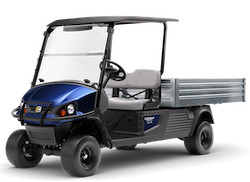
Cushman ELiTE vehicles can operate all day on a single charge on even tough job sites, and their energy efficiency makes for a shorter recharge cycle, allowing operators to opportunity-charge the vehicles during even a few minutes of downtime throughout the working day.
|
 |
|
It’s no secret Li-ion equipment is higher priced, but rental centers can win with EVs with proven, longstanding brand like Gravely and play the long game. |
 |
| Li-iron phosphate battery packs are maintenance-free. They also have a higher energy density and longer service life than lead acid battery packs meaning the Li-ion battery packs offer more stored energy and will last longer than other types of batteries. |
 |
|
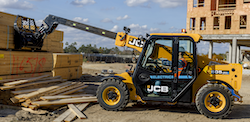
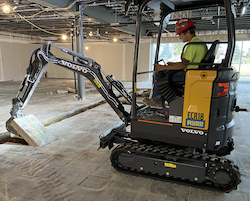
JCB’s E-Tech range, which includes the 19C-IE electric mini excavator and the 505-20E telehandler, provide quiet, clean operation which allows customers to use the equipment indoors and outdoors, maximizing rental utilization. |
 |
|
For JLG equipment owners and operators, the ClearSky Smart Fleet IoT platform revolutionizes traditional telematics (one-way data transmission) through connected two-way machine interactivity. |
 |
|
Electric models offer instant start-up, no need for engine warm-up and fewer breakdowns which improves equipment uptime. |
 |
|
Noblelift Li-ion-powered equipment costs the same as other OEMs are charging for lead-acid powered equipment. Noblelift can do this because it is a global low-cost high-quality manufacturer that has scale. |
 |
|
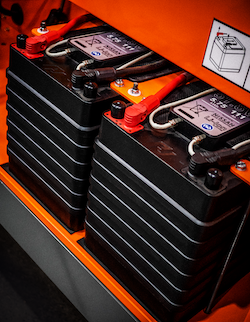
Modern Li-ion battery management systems (BMS) provide real-time monitoring of voltage, temperature and charging cycles, ensuring safe and efficient operation. |
 |
|
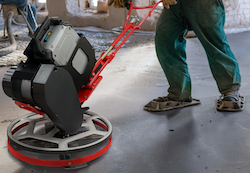
Li-ion battery costs have declined significantly over the past five years by an average of 16 percent, with future predictions of nearly 50 percent by 2026. This trend is expected to continue, making future replacements more cost-effective. |
 |
|
The Vanguard Li-ion 1.5kWh commercial battery (Si1.5) is designed to deliver a 1,000-cycle lifespan with no maintenance. This means rental centers can keep their equipment out in the field longer, and their customers benefit from reliable, maintenance-free power. |
 |
|
Many electric machines now match or even exceed the performance of their diesel counterparts. For instance, Volvo electric excavators, wheel loaders and compactors feature similar specs with additional advantages like instant torque and reduced vibration, enhancing operator comfort and precision. |
 |
|
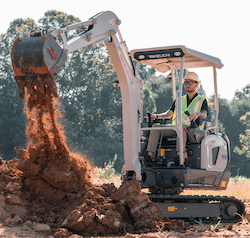
Battery-powered equipment produces zero engine emissions and reduces noise pollution, making it an attractive solution for contractors working on interior jobsites, catering to emissions regulations or projects in residential areas. |
 |
|
With zero emissions and quieter operation, Li-ion machines also expand rental opportunities in applications where traditional equipment may not be permitted. |
 |
|
Product Manager, Emerging Products & Technology |
Electric models offer benefits
Battery-powered equipment offers several advantages to rental centers, but two key benefits stand out the most.
First, electrification in the off-highway industry is growing in certain parts of the country. In these areas, customers are interested in trying out electric equipment but may be hesitant to purchase. They also might want to run equipment indoors where the low noise levels of an electric vehicles (EV) are an advantage. Or they may be looking at ways to reduce their operating costs or have a specific job with bid requirements for zero-emission vehicles. In these situations, having a rental option would be a good fit.
Second, managing fleet maintenance is a huge part of a rental center’s business. Battery-powered equipment requires significantly less maintenance than their combustion-powered counterparts. Regularly scheduled maintenance is not only less costly and often has longer intervals, but there’s also the added benefit of removing possible sources of end user errors, as even the most novice operator can’t clog a radiator or an air filter if it isn’t there.
Battery-powered equipment is new to the off-highway equipment industry in general, and this unfamiliarity can lead to a lot of questions and concerns from those who are encountering it for the first time. This is especially true when talking about equipment that forms a critical part of a rental center’s business. Understanding the unique value EVs bring to the job site and customer requirements is key to justifying a higher rental rate. Requirements, such as zero-emissions for indoor use and noise abatement in urban areas, are two valuable benefits of EVs.
For OEMs, it is important to work to educate customers about how EVs work and how they fit into a rental business. The equipment rental industry has been using diesel machines for more than a hundred years, so there’s some learning required when it comes to making the most of these new product categories.
It’s important to look at the complete lifecycle costs when evaluating Li-ion powered equipment. Often, the upfront cost for an EV may be higher than its diesel counterpart, however, maintenance can be a significant source of savings. Fuel costs vs. electricity is another big area for potential savings. If the rental center is re-fueling their machines, they will notice significant savings in using electricity over diesel. In situations where the end user is the one fueling the equipment, the simplicity of plugging in an electric vehicle, as opposed to re-fueling may not only provide value to the customer, but it could also justify a higher rental rate.
Speaking of higher rental rates, in areas where customers are seeking out EVs, whether for performance advantages, job site conditions or legal/regulatory/bid requirements, the rental center may be able to earn higher revenue from these vehicles. The key is to consider all these aspects when evaluating Li-ion powered equipment.
 |
|
Senior Manager, Product Strategy |
3X life over lead-acid batteries
The major benefit of Cushman’s ELiTE Li-ion powered utility vehicles is the vehicles’ zero-maintenance Samsung SDI battery technology, exclusive to Cushman vehicles. When compared to gas-powered vehicles and even electric vehicles powered by traditional lead-acid technology, Cushman ELiTE vehicles require significantly less maintenance, reducing operating and labor costs while also providing peace of mind for the renter and the rental-center operator that the vehicle will be reliable and productive in the field.
Cushman has been building vehicles for almost a decade using the Samsung SDI Li-battery technology platform, and those vehicles – numbering more than 230,000 to date -- have logged more than 88 million hours of use in real-world environments.
Traditionally, the main concern of equipment rental centers – and renters themselves – has always been range anxiety. A renter needs to be confident in a vehicle’s ability to handle tough tasks on the job site all day long. A high-quality Li-ion vehicle solution eliminates that concern. Cushman ELiTE vehicles can operate all day on a single charge on even tough job sites, and their energy efficiency makes for a shorter recharge cycle, allowing operators to opportunity-charge the vehicles during even a few minutes of downtime throughout the working day.
It’s easy to rationalize the purchase of a high-quality Li-ion vehicle based on ROI and customer satisfaction. Cushman ELiTE vehicles require significantly less service and maintenance, reducing operating costs and increasing margins for the rental center. The vehicles also are extremely reliable in the field, so renters and rental centers alike can be assured that their rental fleet will be up and running when they need it, without expensive downtime and service calls that sap productivity.
For comparison’s sake, lead-acid batteries are typically spent after three to four years in a commercial application and require full replacement, while the Samsung SDI batteries in Cushman ELiTE Li-ion vehicles are covered under warranty for a full five years after purchase – and the batteries typically last even longer. It’s not unreasonable to expect that a vehicle powered by lead-acid technology will require three sets of batteries before one of Cushman ELiTE vehicles requires battery replacement.
 |
|
Marketing Director |
Reduced maintenance affects ROI
As Li-ion battery technology is fully embedded into the outdoor power equipment marketplace, the question remains with many operators, equipment dealers and rental shops: Are electric lawn mowers right for me? The answer lies in making an informed decision on battery power.
For rental shops, Li-ion-powered commercial zero-turn lawn mowers like Gravely’s Pro-Turn EV and Pro-Stance EV offer several advantages through:
- Easier, reduced maintenance
- Expanded customer market
- Product lifecycle
- Operator comfort from reduced vibration and noise
Rental equipment is used by several customers, but regular maintenance is the rental center’s responsibility. However, with no engine, there’s no oil, oil filters, spark plugs or air filters to check or change. The time and expense for these items are removed from the equation entirely.
Same for hydraulic oil changes. Wheel-drive motors in battery-powered products replace transaxles, and on a Gravely unit, the maintenance interval is every 500 hours compared to every 400 hours in comparable gasoline-powered equipment. With electric motors replacing the wheel- and deck-drive systems, there are belts, surprise breaks, or changes, once again keeping more dollars in the rental center’s pocket.
Battery-powered options can also help you bring in new customers. For some, it’s the environmental appeal and for others, it’s the attraction to equipment that doesn’t emit exhaust fumes, engine noise or vibration. However, considerations for those benefits aren’t exclusive to operators; it’s a preference of certain clients. Parks and nursing homes, hospitals and school campuses may be noise-restricted, closing a large segment of business to landscapers who haven’t invested in battery power. That’s where rental comes into play. ewntal center investment brings in contractors that see growth opportunity through these spaces.
Battery-power is also a very reliable revenue generator. Cashflow from the rental fleet needs to outpace monthly payments and operation costs, and the equipment needs to have a lifecycle extending through the terms of its loan, bonus if it lasts longer. Without idlers, pulleys, linkages, fuel systems and intricate engine components, there’s an equal number of fewer opportunities for failure.
In making the case for a battery-powered zero-turn mower know how to make the case to your customers. It’s easy to sell on gasoline savings and comfort due to the absence of engine vibration and rattling belts and pulleys, but you’ll likely get questions on range anxiety and control responsiveness.
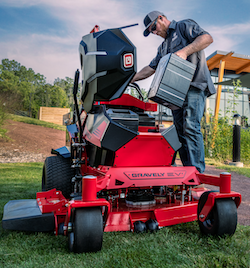
Gravely EVs have a screen displaying charge levels, and they’re powered by four easily removable QuickSwap FusionCore batteries. On a full charge, users can get up to five hours of continuous cutting, but users can also swap for spares in just seconds, similar to filling the fuel tank on a combustion mower. Gravely’s proprietary control systems are engineered to drive like a gasoline mower, so there’s no jerky movements or learning curves.
It’s no secret Li-ion equipment is higher priced, but rental centers can win with EVs with proven, longstanding brand like Gravely and play the long game.
As a rental shop, comparable gasoline expense can’t be factored in, but reduced maintenance, fewer wear part replacements, and an absence of engine repairs still produces significant savings over time. To estimate savings, Gravely offers an online ROI calculator. It varies, but the point at which many operators get the extra cost back occurs in as little as two years.
Li-ion standards not yet set
 |
|
Marketing Manager, Americas |
Today, Haulotte does not have Li-ion powered machines on the market, but that does not mean that a Li-ion solution will never be available to our customers. Li-Ion batteries have an advantage over flooded lead acid (FLA) or absorbed glass mat (AGM) batteries, especially in large machines requiring high power density and small machines with limited space. Still, Haulotte is approaching this energy solution with caution to make sure it supplies the best solution to our customers.
In some ways, the industry are still in the VHS/BETA wars with this technology. Today’s Li-Ion battery solution has not yet been standardized. There are many variations of chemical compositions, enclosure shapes and battery controlling systems. Plus, there seems to be exciting advances announced weekly about battery technology in general. A battery installed on a machine today may no longer be available for purchase when it needs to be replaced at the end of the promised 7 to 10-year life span. Newer technology may require changes to the charger and even the power harness to accept the new solution.
Rental customers already have a reputation for abusing traditional FLA batteries. Li-Ion batteries can be abused in many of the same ways. Regardless of the technology inside the battery, they are in danger of being dropped or experience heavy vibrations and punctures. All battery types experience poor performance in extreme heat and cold weather conditions. Additionally, all batteries, including Li-Ion batteries, suffer if they are overcharged, undercharged, experience heavy use leading to over-discharge, or charged using non-approved chargers.
Li-Ion batteries can mitigate some potential damage from abuse using technology to compensate for poor maintenance practices, but they cannot solve all the problems. While all flooded lead-acid batteries come with a warning about the hazards of corrosive liquids and potential explosion, some type of ignition source must be present for a FLA battery to explode at the same time the battery is venting hydrogen and oxygen gases. That usually only happens when a battery is overcharged in a poorly ventilated area. Because Li-Ion batteries have such a high energy density, manufacturing defects, temperature extremes or mechanical damage to the battery can result in thermal runaway, a chemical reaction within the battery that does not require an external ignition source but results in a very hard-to-control chemical fire.
Today’s FLA batteries, when paired with a battery management system, have longer cycle times and overall life spans than the same technology 10 years ago. They are also the lowest cost per amp hour of any battery system. They require some watering maintenance to realize those benefits. The Haulotte Activ’Energy Management system includes an automated watering system, reducing the maintenance requirement to a one-step process of filling an onboard reservoir monthly. This system also takes care of equalizing charges to extend the overall lifespan. That simply leaves visual checks and occasionally cleaning of battery terminals to realize the longest life span possible. At the end of their battery life, FLA batteries are 99 percent recyclable. Most of the material is reused to make the next battery, allowing for a truly sustainable, closed loop recycling process.
In North American customer interviews today, there is not much interest or demand in Li-ion battery technology. Haulotte customers know and understand the benefits of the technology, but they also know the risks that come with the technology. They are waiting to see how other rental stores adopt the technology and how it performs over time before they jump in to trial the new batteries within their business plan.
 |
| Marketing Manager Davis Howard HC Forklift America |
Battery chemistry matters
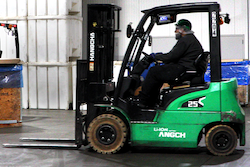
The adaptation of electric equipment has become more widely accepted in recent years with equipment manufacturers switching from equipment powered by traditional lead acid batteries to Li-iron phosphate battery packs and higher voltages or designing all-new electric equipment that was originally powered with an internal combustion (I.C.) engine. Li-iron phosphate battery packs are maintenance-free. They also have a higher energy density and longer service life than lead acid battery packs meaning the Li-ion battery packs offer more stored energy and will last longer than other types of batteries.
Equipment manufacturers are beginning to redesign their equipment by integrating the Li-ion battery into the chassis and increasing the system voltage. The integrated design provides better chassis stability and a more ergonomic operator compartment. The increased system voltage allows for a more efficient use of energy and longer run times.
With the advances in electric Li-ion powered, equipment, users can now make the switch from I.C.-powered equipment that releases harmful emissions and requires more drivetrain maintenance. Ultimately, this means that rental centers can bring in new equipment that offers a maintenance-free battery pack, zero emissions, lasts longer and can withstand the abuse that rental applications demand, all while seeing a significant ROI.
There are two major concerns that customers typically have with Li-ion-powered equipment. They are charging infrastructure and the fear of the battery causing a fire. Charging infrastructure is a concern, especially with rental applications, as users may not have the 3-Phase 480-volt power needed to charge the forklift or don’t want to pay an electrician to hook up the charger for a short-term rental. To help rental customers, Hangcha has added a 110-volt charger as an external or built-in option. This allows rental customers to charge their equipment anywhere there is a standard household outlet.
The fear of a Li-ion battery catching fire comes from a different Li-ion chemistry that was used. Hangcha uses Lithium Iron Phosphate (LiFePO4) cells and proprietary BMS software its battery packs. The battery chemistry has a much higher thermal runaway temperature than the other types of lithium-ion battery chemistry. Because of this, our LiFePO4 battery packs are less likely to experience thermal runaway than their counterparts. Hangcha combines this LiFePO4 chemistry with a proprietary battery management software (BMS) software that monitors the battery’s temperature and will turn it off if it notices the temperature starting to increase dramatically. This ensures users that they no longer need to fear fires associated with lithium-ion battery packs.
As a part of itsn ew energy efforts, Hangcha’s has redesigned almost all of its equipment so it is electrified. By manufacturing this equipment at the scale of, Hangcha, the company can provide state-of-the-art LiFePO4-powered equipment at a lower price point that is similar in price to competitors lead-acid powered equipment and a little more than their I.C.-powered equipment.
Rental customers are also able to experience benefits of LiFePO4 when compared to lead-acid and I.C. powered equipment, including longer run times than lead-acid powered equipment, longer service life than both I.C. and lead-acid powered equipment, and maintenance-free battery packs which ultimately increases uptime. With a lower price point and the great benefits LiFePO4 battery packs, rental centers can quickly see an ROI even on light duty use cases where the equipment isn’t rented as frequently.
 |
|
Product Manager |
Lower TCO with Li-ion power
For rental centers, the appeal of Li-ion-powered equipment lies in its efficiency, reduced maintenance and increased market demand for sustainable solutions. With no fuel costs, fewer service requirements and longer operational life, these machines lower total cost of ownership while increasing uptime. Additionally, contractors are increasingly looking for zero-emission alternatives to meet regulatory requirements, making Li-ion-powered equipment a strategic investment for rental fleets aiming to stay ahead of evolving job site demands.
A key advantage Li-ion machines offer is flexibility. JCB’s E-Tech range, which includes the 19C-IE electric mini excavator and the 505-20E telehandler, provide quiet, clean operation which allows customers to use the equipment indoors and outdoors, maximizing rental utilization. With rapid-charging technology and extended runtime, Li-ion-powered machines ensure productivity without compromising performance.
Rental centers commonly express concerns regarding battery life, charging infrastructure, durability and overall market acceptance. JCB addresses these by engineering machines that are built for rugged environments and equipping them with robust battery management systems to optimize longevity and reliability.
One of the primary worries is downtime due to charging. JCB mitigates this with the universal fast charger, allowing for rapid recharges between shifts to keep machines working throughout the day. Additionally, battery durability in extreme conditions is a focus, ensuring that JCB Li-ion solutions perform reliably in harsh temperatures and demanding job site environments.
Another concern is the learning curve associated with new technology. To support rental centers, JCB offers comprehensive training and service support, ensuring fleet managers and operators can confidently integrate and maintain Li-ion-powered equipment with ease. Lastly, the resale market for electric machines continues to grow, reinforcing the long-term value of these investments.
The return on investment for Li-ion-powered equipment is driven by reduced operating costs, increased machine uptime and growing customer demand for electric solutions. With no fuel expenses and minimal maintenance compared to diesel counterparts, rental centers benefit from lower total cost of ownership over the equipment’s lifespan.
Li-ion machines tend to have higher utilization rates due to their ability to operate in a wider range of environments, including emission-restricted indoor spaces. This versatility leads to faster return on investment as demand for cleaner, quieter equipment continues to rise.
In some states, government incentives and grants for electrification further enhance the financial case for adoption. By investing in JCB’s E-Tech range, including models like the 19C-1E, 505-20E and S1932E, rental centers in these regions can future-proof their fleets, ensuring compliance with tightening regulations while maintaining a competitive edge. As the market shifts toward sustainable solutions, those who integrate lithium-ion technology early will position themselves as industry leaders, maximizing both short- and long-term profitability.
Charging technology helps assure uptime
 |
|
Director of Product Management – Scissor Lifts, Vertical Lifts & Low-Level Access Lifts |
There is more demand right now for environmentally friendly equipment that requires fewer scheduled services and less dependency on hydraulic oils while offering zero emissions and a quieter work area. This drives product development for more advanced electrified solutions, including Li-ion battery technology.
Li-ion batteries provide some significant performance features over lead-acid batteries that add value to the rental equipment market, such as quick charging. Most hydraulic-drive, as well as some electric-drive, scissor lifts on the market have a battery charge that lasts just a single shift and takes 8-10 hours to charge completely. That means that the machine is not usable for nearly half a day. Some scissor lifts powered by a Li-ion battery (or multiple LKi-ion batteries) can go from not charged to fully charged in much less time.
In addition to faster recharging cycles, Li-ion batteries have high-energy density and require less ongoing maintenance. For example, with Li-ion batteries the need to water the batteries is eliminated, one of the most common causes of premature battery failure. This leads to fewer battery replacements; therefore, less downtime and ongoing costs associated with battery replacements.
In addition, Li-ion batteries offer environmental benefits over FLA batteries. They eliminate the risk of acid spills and outgassing concerns, making them better suited for work completed in environmentally sensitive areas like clean rooms, data centers and hospitals.
Today, Li-ion batteries come at a higher price point than alternative options. With electrification gaining momentum across the access industry, JLG experts anticipate the cost of Li-ion battery technology to come down over time as volumes increase.
Battery technology is continuously developing. JLG is following this closely and is investing research and development dollars specifically in this area. JLG efforts are not exclusive to battery power and electrification; JLG researchers are looking toward various technologies and resources that may power heavy equipment in the future.
As trends like electrification continue to evolve the rental equipment industry, JLG is committed to bringing the connected solutions and advanced products to market that will allow rental stores and their customers to continue to be successful with JLG equipment.
For any company owning and/or operating electric scissor lifts, it is important to think about how these machines will be charged. Right now, the big gap in the ecosystem is the charging infrastructure, especially on early-stage construction sites where power is often limited. It is important to consider when these machines will be charged.
Runtime is a big deal to end-users. Understanding how long a machine needs to run each day to complete the work is essential. For example, will the scissor lift need to run on continuous shifts, or will renters can charge the machine regularly? This may impact the type of lift/s being used on a project.
Probably the most beneficial tip JLG experts can offer is to embrace advances in battery monitoring to maximize uptime. Tracking battery use and recharge ensures maximum machine uptime and reduce the machine's total cost of ownership due to prolonged battery life cycles.
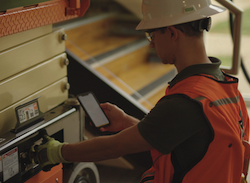
For JLG equipment owners and operators, the ClearSky Smart Fleet IoT platform offers this capability, revolutionizing traditional telematics (one-way data transmission) through connected two-way machine interactivity. Through this system, users can tell which electric machines need to be plugged in from the fully charged ones. By using the charging filter, users can see which machines are actively being charged.
 |
|
Senior Product Manager |
Greater operational efficiency
Li-ion-powered equipment offers many advantages, including instant power, increased reliability, productivity, and safety. One of the most common causes of rental returns is a user's inability to start gas-powered equipment—often due to fuel shut-off switches, priming, choking or cold-weather starting issues. If not operator error, these problems are frequently caused by fuel system failures, particularly those related to ethanol.
Unlike gas engines, Li-ion-powered equipment eliminates these risks, reducing return rates and increasing fleet uptime.
Beyond reliability, Li-ion-powered equipment provides a significant increase in operational efficiency for rental centers. Gas-powered units require regular maintenance, including carburetor cleaning, fuel stabilizing and emissions compliance. Battery solutions eliminate these maintenance burdens, extending the life of rental equipment. Additionally, there is growing demand for work in confined —often indoor — spaces, where gas engines require costly ventilation systems or aftermarket emissions scrubbers. Li-ion-powered equipment allows rental centers to offer a safer, more efficient solution for confined spaces while reducing emissions.
By integrating Li-ion-powered solutions into their fleets, rental centers can improve customer satisfaction and reduce downtime—all while offering equipment that meets evolving job site demands.
Many rental centers question whether Li-ion-powered equipment can match the power, torque and durability of gas models, especially for high-demand applications. Some manufacturers now deliver Li-ion-powered technology that delivers the same or greater performance as gas, enabling users to complete tough applications through dense materials without sacrificing power. Advances in high-output Li-ion batteries and efficient motor designs allow for increased power delivery and runtime, making battery-powered solutions a viable replacement for gas.
An example of this modern technology is Milwaukee Tool’s RedLink Plus Intelligence that provides the most advanced system of equipment electronics in the industry. By enabling real-time communication between the battery and motor, it optimizes performance while offering best-in-class thermal and overload monitoring, protecting equipment and extending overall battery life.
Additionally, Milwaukee Tool’s integration of PowerState brushless motor technology enhances efficiency by optimizing the perfect combination of performance and productivity. These motors are uniquely engineered for the demands of the equipment, delivering consistency even in the most demanding applications.
One way rental centers can justify the purchase of Li-ion-powered equipment is by focusing on long-term compatibility and fleet efficiency. Maximizing ROI starts with strategic battery system investments. A shared battery platform across multiple equipment rentals increases utilization and profitability, allowing rental centers to get more value from fewer batteries while streamlining operations.
In addition to compatibility benefits, Li-ion-powered equipment significantly improves operational efficiency by reducing maintenance needs and eliminating gas-related issues such as carburetor failures and starting problems. With fewer service interruptions and faster equipment turnaround, rental centers can keep more units in circulation, minimizing downtime and maximizing fleet availability.
By investing in a versatile, expanding battery ecosystem, rental centers can enhance customer satisfaction, improve profitability, and ensure that Li-ion-powered solutions remain a sustainable, high-value addition to their fleet.
 |
|
Product Manager |
Higher upfront costs but lower operating costs
Li-ion-powered equipment has lower fuel and maintenance costs compared to diesel-powered machines. It eliminates the need for fuel storage or regular engine maintenance, potentially leading to cost savings for rental centers.
As businesses and industries increasingly focus on sustainability, offering Li-ion-powered equipment aligns with environmental standards and regulatory requirements. This enables rental centers to cater to clients concerned about ecological impact. The demand for electric and Li-ion-powered equipment is expected to rise in the coming years. By offering these machines, rental centers can maintain market relevance and competitive positioning.
Li-ion-powered equipment generally operates more quietly and produces fewer emissions than diesel machines, making it suitable for customers working in noise-sensitive areas or regions with strict emission regulations, such as indoor environments.
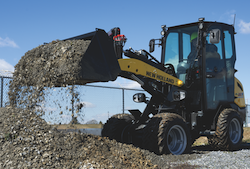
The upfront cost of Li-ion-powered equipment is often higher than diesel equipment, which can make rental centers hesitant to invest. With lower fuel costs, less frequent maintenance and longer-lasting components, the long-term savings can offset the higher initial purchase cost. New Holland Construction also offers flexible financing options to make the transition easier.
Rental centers may have concerns about the logistics and costs of setting up charging infrastructure to support a fleet of Li-ion-powered equipment. New Holland Construction offers charging station solutions, along with providing guidance on energy consumption and efficiency. New Holland is also investing in fast-charging technologies, which can reduce downtime between uses.
Rental centers may also worry about the longevity of Li-ion batteries, especially when equipment is rented out frequently and used heavily. New Holland Construction offers warranties and battery replacement services to ensure the equipment remains in optimal condition.
When calculating ROI, rental centers should factor in both the initial cost and the operational savings. Li-ion-powered equipment typically has lower fuel costs due to rising diesel prices, minimal maintenance (no oil changes or exhaust system repairs), and longer intervals between servicing. Over time, these savings can significantly reduce operating costs.
The government offers incentives for businesses that transition to cleaner technologies. These incentives can help offset the initial investment and make the purchase of Li-ion-powered equipment more financially viable in the short term.
Plus, users are not exposed to diesel fumes, spills, or fuel-related fire risks, reducing workplace hazards. Electric models offer instant start-up, no need for engine warm-up and fewer breakdowns which improves equipment uptime.
 |
| President Bill Pedriana Noblelift North America |
Li-ion TCO less than engine-powered equipment
The main benefits of incorporating Li-ion powered equipment into equipment rental centers’ fleets include significantly reduced maintenance needs, longer runtimes with opportunity charging during breaks, minimal downtime, increased productivity due to faster charging times, improved safety features and a more environmentally friendly option compared to traditional battery technologies and internal combustion engine-powered equipment.
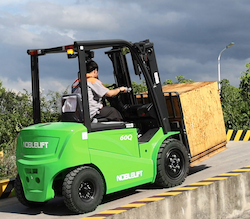
The main concerns that equipment rental centers have about Li-ion-powered equipment is their cost and safety, but Noblelift and others have eliminated the cost concern. Noblelift Li-ion-powered equipment costs the same as other OEMs are charging for lead-acid powered equipment. Noblelift can do this because it is a global low-cost high-quality manufacturer that has scale.
The safety concerns rental centers have are old concerns. Noblelift batteries are equipped with a Battery Management System (BMS), thermal management system, and an automotive-grade DC high-voltage control system. The Li-ion chemistry and technology that Noblelift uses is the longest lasting and safest lithium battery available. Our batteries last three times longer than lead-acid batteries.
Li-ion powered equipment provides a straightforward ROI calculation. It lasts two to three times longer than traditional alternatives, requires significantly less maintenance and enhances productivity. Total cost of ownership can be 60 to 70 percent less.
 |
| Product Manager Kai Meng Sinoboom |
Long-term savings beat higher upfront costs
The attraction/benefit for equipment rental centers bringing Li-ion-powered equipment into their fleets is improved efficiency and reduced costs. Li-ion batteries run longer and charge faster, maximizing uptime. Unlike lead-acid batteries, they require no maintenance, watering or equalization, reducing labor costs. With no acid or corrosion issues, they extend equipment life, lower service expenses, and reduce total ownership costs.
However, equipment rental centers are concerned about the upfront cost of Li-ion-powered equipment. It has a higher initial price than lead-acid alternatives, which can be a deterrent for rental businesses focused on short-term costs. However, Sinoboom engineers focus more on the long-term savings in maintenance, extended battery lifespan and lower TCO that offset the initial investment.
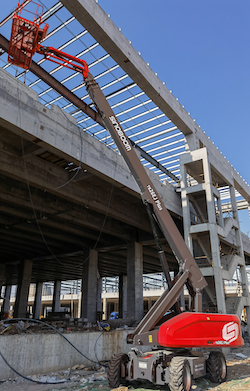
Rental companies are also concerned about charging Li-ion powered equipment. To address this concern, Sinoboom features its ERM removable charging module that is equipped with forklift pockets, allowing easy transfer and installation to other equipment. This modular design saves time during installation and removal but also reduces the cost of sharing the power module among multiple machines. The quick wiring connection further minimizes installation time, saving valuable operational hours for users.
Rental centers also have concerns about battery longevity and fire. Modern Li-ion battery management systems (BMS) provide real-time monitoring of voltage, temperature and charging cycles, ensuring safe and efficient operation. Additionally, Sinoboom’s Li-ion batteries are certified to meet rigorous industry safety standards, reinforcing confidence in their reliability.
For rental centers, Li-ion-powered equipment provides a strong return on investment by reducing downtime and overall operating costs. While AGM batteries also offer maintenance-free operation, Li-ion goes a step further with faster charging, longer lifespan and consistent power output throughout the battery cycle. This means rental fleets can turn equipment around quicker between jobs, maximizing rental opportunities.
Additionally, Li-ion batteries have a longer service life compared to AGM batteries, reducing the need for frequent replacements. As more job sites prioritize low-emission and energy-efficient equipment, rental centers investing in Li-ion-powered equipment can stay ahead of market trends and future regulations.
 |
|
Vice President, Chief Engineer |
Li-ion wins over lead-acid batteries
Equipment rental centers are increasingly adding Li-ion-powered machines to their fleets, and for good reason. The advantages over traditional lead-acid batteries are clear: deeper discharge capabilities provide longer run times, and faster charge cycles keep equipment operational with less downtime. Beyond these well-known benefits, Li-ion technology also offers rental centers advantages in security, maintenance and overall operational efficiency.
One of the less discussed but highly impactful benefits is the potential reduction in battery theft. Lead-acid batteries have long been a target for theft due to their scrap value, but lithium batteries lack this incentive. In addition, many Li-ion solutions are designed specifically for the equipment they power, making them impractical for resale or repurposing in other applications and further discouraging theft. Unlike lead-acid batteries, which require frequent maintenance and therefore easy access, Li-ion battery compartments can be locked or bolted shut. The added security reduces tampering risks and minimizes service interruptions caused by unauthorized access.
While the benefits of Li-ion technology are clear, rental centers also have legitimate concerns. One of the most common is compatibility with existing charging infrastructure. The good news is that most modern chargers can be reprogrammed to accommodate Li-ion batteries, eliminating the need for expensive replacements. A simple software update is often all that’s required, significantly reducing conversion costs.
Weight is another factor that rental businesses must consider. Many access equipment designs rely on the mass of lead-acid batteries as part of their ballast system. Because Li-ion solutions are lighter, additional ballast may be required to maintain stability. This is a design consideration that manufacturers must account for when transitioning equipment to Li-ion power, ensuring that performance and safety remain uncompromised.
Perhaps the biggest concern surrounding Li-ion batteries is the risk of thermal runaway and fire. While this risk does exist, proper engineering mitigates it significantly. High-quality Li-ion battery packs include an advanced Battery Management System (BMS) that monitors and regulates charge levels, temperature and cell health to prevent dangerous conditions. Reputable manufacturers source batteries from trusted suppliers who prioritize safety, rather than cutting corners with lower-quality cells. This is why rental centers should work closely with manufacturers who understand battery chemistry, thermal management and its integration into heavy equipment applications.
The upfront cost of Li-ion-powered equipment is undeniably higher and rental centers often question whether the long-term benefits justify the investment. However, when you analyze the total cost of ownership, Li-ion makes a compelling case. Lead-acid batteries require consistent maintenance, and in a rental fleet, that maintenance is often inconsistent at best. As a result, many rental centers find themselves replacing lead-acid batteries annually. When factoring in labor costs, downtime and replacement expenses, the savings with Li-ion quickly add up.
Another key consideration is the secondary market. Many rental businesses sell equipment after a few years of use, often around the same time that lead-acid batteries would need replacement. Li-ion-powered machines retain more of their value because buyers recognize their longer-lasting, maintenance-free power systems as a major advantage. Additionally, Li-ion battery costs have declined significantly over the past five years by an average of 16 percent, with future predictions of nearly 50 percent by 2026, and this trend is expected to continue, making future replacements more cost-effective.
 |
|
Vice President, Sales and Marketing |
Lower service and maintenance needs
There are some obvious benefits for rentals centers to bring in Li-ion powered equipment into their fleets. Li-ion-powered equipment have lower maintenance costs, which is especially attractive for locations that do not have full-fledged service departments. Li-ion batteries often do not require maintenance other than charging and light cleaning as opposed to traditional engine-powered products that require oil changes, spark plugs, air filters among other things that could go wrong.
Another attraction is use in zero-emissions applications, which allow operators and renters to work in more job site applications such as indoor or urban environments.
The main concerns that manufacturers have experienced regarding Li-ion powered equipment are front-end costs, run time and charge time. Battery-powered products typically have a higher upfront cost to the rental center or end user, but the long-term savings from eliminating maintenance and fuel easily justify the investment. Allen Engineering offers financing and leasing options on all of products through partners like North Star Capital.
Run time is another concern that we hear from the marketplace but with the many advances that continue to roll out in the battery space, Allen Engineering engineers are confident that that they will soon outpace combustion engines. Further, swappable batteries allow users to quickly keep machines operating on job sites.
A big concern end users have is charging time of battery units which ties into uptime. Some job sites lack charging infrastructure onsite, but many Li-ion batteries have fast charging options that do not hinder power supply on job sites for other critical functions. Allen Engineering’s main goal when developing any Li-ion powered product is to have run time that simulates a full day’s work for whatever product found with engine-powered equipment.
A big rationalization of Li-ion powered equipment for rental centers is tied to green initiatives, uptime and resale value. Whether it is local or state governments, a contractor’s preference or specifications for project where there is a global initiative toward using sustainable equipment. By having Li-ion powered equipment available to rent, rental centers can be the one-stop shop for contractors tackling green projects.
 |
|
Product Manager |
Lower maintenance needs improve uptime
Battery-powered tools require significantly less maintenance than gas-powered ones, reducing the time spent on repairs and updates. This means more opportunities to rent out the tools due to their lower maintenance needs. While the initial cost of battery-powered tools is higher, they offer greater profitability for rental businesses thanks to their higher rental rates.
Battery-powered tools offer ease of use, minimizing the risk of operator errors such as using the wrong fuel or flooding the engine. This leads to a more satisfied user experience.
A primary concern for rental centers regarding battery-powered equipment is the ease of making repairs. Stihl guarantees that its battery-powered tools are built to the same high standards of quality and durability as its gas-powered tools. Many Stihl battery tools deliver comparable power and performance to their gas-powered counterparts. For instance, the Stihl TSA 300 battery-powered cut-off machine offers similar power and performance to the Stihl TS 420 gas-powered cut-off machine.
Runtime is a key consideration for battery-powered tools. Understanding your customers’ needs and expectations is crucial for recommending the best tool for the job. Battery-powered tools are ideal for indoor use due to their low noise and lack of exhaust emissions. Encouraging users to rent two batteries and a rapid charger for the job. However, for larger jobs requiring more power, gas-powered tool might be more suitable.
Battery-powered tools offer reduced noise, making them ideal for crews working in noise-sensitive environments. They also produce zero direct emissions, reducing air pollution and contributing to a cleaner environment. Battery-powered tools are often lightweight and easier to maneuver, making them perfect for indoor use, trenches, or tight spaces. Without the need for gasoline, battery-powered tools provide convenience by avoiding spills and the hassle of refueling. Their ease of operation also prevents improper refueling, which could cause potential damage to the tool.
STIHL has developed educational tools and resources to help professionals transition to battery-powered equipment. These include tools that calculate charging costs and fuel savings, helping pro customers better understand the potential bottom-line business benefits.
 |
|
Director, Motive Sales |
Up to 3X life over lead-acid batteries
Li-ion is becoming one of the fast-growing chemistries in the battery industry because it offers several benefits compared to other types of batteries. Trojan batteries use lithium iron phosphate (LiFePO4), which have 4,000 cycles. They charge quickly, achieving a full charge in under four hours with high-output chargers. They can also be opportunity-charged without damaging the batteries. They require much less maintenance compared to flooded lead-acid batteries and do not need watering. Plus, there is no terminal corrosion or need to deep clean the batteries every few months. All this combines to offer a lower total cost of ownership (TCO) because they can last 10 years, two to three times longer than flooded lead acid, and are protected by an industry-leading eight-year warranty. While lithium-ion batteries may have a higher initial price, TCO over the life of the batteries will be lower. This is due to lower operating costs, such as reduced maintenance, lower energy consumption and less downtime.
The top two concerns with Li-ion batteries are safety and cost. Safety is Trojan’s number one priority. It starts with the use of the stable LiFePO4 cells in Trojan Li-ion batteries, such as the GC2 24V, 36V, and 48V and Trojan Lithium OnePack 48V Li-ion battery pack. LiFePO4 is a safer chemistry for most applications than nickel manganese cobalt (NMC)-based chemistry cells. LiFePO4 is less prone to overheating and thermal runaway. Further, Trojan Li-ion battery design integrates multiple internal temperature sensors and meets Society of Automotive Engineers (SAE) standards for durability and vibration. Final assembly is done in the United States, adding an additional level of confidence in the safety of the batteries.
 |
|
Business Development Executive, Rental Channel |
Swappable interface improves ROI
Rental centers are increasingly recognizing the distinct advantages of Li-ion-powered equipment. The significant reduction in equipment maintenance translates into a lower total cost of ownership for their fleet and improved equipment uptime. For example, the Vanguard Li-ion 1.5kWh commercial battery (Si1.5) is designed to deliver a 1,000-cycle lifespan with no maintenance. This means rental centers can keep their equipment out in the field longer, and their customers benefit from reliable, maintenance-free power.
The data-rich nature of smart Li-ion batteries is transforming fleet operations. Batteries with a robust Battery Management System (BMS), such as those in Vanguard commercial batteries, transmit valuable operational data that can help rental centers make informed, strategic decisions.
The BMS, which acts as an onboard computer, is central to this data exchange and gives rental companies real-time insights into battery health, location, charge cycles and operating history. Vanguard swappable battery packs feature optimized network communication, enabling seamless internet connectivity via IoT devices. The standardized interface also ensures compatibility across a range of product platforms, which minimizes integration complexity and costs.
The Si1.5 offers a universal battery solution that can be utilized across many different applications and scaled to meet diverse power needs. This standardization provides consistent offerings across rental locations and simplifies charging and service network development, ensuring streamlined support for battery-powered equipment.
Vanguard’s Li-ion batteries eliminate range anxiety, simplify charging and brings standardization to the fragmented battery-powered market. The Si1.5, with its swappable configuration, draws upon Vanguard’s expertise from its fixed battery series to deliver impressive runtime and reliable power.
A swappable interface benefits both rental houses and their customers. The Si1.5, for instance, has a standard charge time of 75 minutes with the Vanguard 1,425W charger. This eliminates range anxiety and downtime due to charging. A swappable interface also offers a valuable way to address the seasonal nature of the rental equipment industry. Traditionally, seasonal engine-powered equipment may remain in storage, unused for extended periods of time, which negatively impacts TCO. With a swappable system, batteries can be removed from off-season equipment and used in peak-season machinery.
Vanguard is also addressing concerns about availability by increasing the number of products where the batteries can be used. Through innovative solutions and strategic partnerships, Vanguard is facilitating a seamless integration of Li-ion powered equipment into the rental market.
Determining the return on investment (ROI) is the heart of the discussion around electric equipment adoption. How ROI is determined depends on the specific application and that application’s power needs. While larger equipment with heavy-duty, prolonged operations may still favor engine power, the ongoing advances of battery technology is expanding the scope of viable electric applications, particularly in the compact equipment sector.
Electrification offers compelling advantages, including reduced maintenance costs and enhanced operational efficiency. It enables construction equipment that was limited to outdoor use can be operated indoors and in enclosed spaces. The ability to rent reliable battery equipment can allow contractors to bid on a wider range of jobs and create new revenue streams.
Although rental companies are increasingly aware of the long-term benefits of Li-ion equipment, a shift in mindset remains crucial. Vanguard is committed to supporting OEMs with any solution needed to meet customer demands, providing comprehensive support, including competitive warranties and a global service network.
 |
|
Product Manager, Sustainable Power |
Li-ion equipment can outperform engine-powered models
In many places, rental centers are getting more requests for electric equipment because contractors are facing tighter restrictions on emissions and noise. Renting is a great way for contractors to try electric equipment without the commitment of buying. Many of them find it more than capable of getting the job done, so they’re more likely to come back for longer rentals and/or other electric machines.
A perk for rental house staff is that electric equipment generally requires much less maintenance. There is no need for engine-related upkeep like oil changes, DEF and filter replacements; and regular servicing is limited to hydraulic oil, grease and in some cases, coolant for water-cooled components. Volvo CE, for example, conservatively estimates that users will see a 35 percent savings in maintenance cost and time over the lifespan of electric machines.
Rental center staff and customers may have questions or concerns about how to charge battery-electric equipment, but this isn’t as tricky as it might seem. Many of these machines can charge on regular 120-volt or 240-volt outlets and come with the plugs or adapters needed to do that. For worksites without access to the grid, there are portable options that fit just about any situation, including DC fast chargers that reduce charging time. OEMs often have relationships with the makers of these charging solutions and can steer you toward the ones that would work best for you and your customers.
Another common concern has to do with performance and runtime. However, many electric machines now match or even exceed the performance of their diesel counterparts. For instance, Volvo electric excavators, wheel loaders and compactors feature similar specs with additional advantages like instant torque and reduced vibration, enhancing operator comfort and precision.
Depending on the application, many electric machines can work a full shift on a single charge or with a quick top off during a lunch break. A diesel machine can idle for 40 to 50 percent of its shift, burning fuel, making noise and accumulating hours. An electric machine shuts off after a few seconds of not being used, which preserves the charge and stops the accumulation of working hours. A good OEM will arm rental center staff with the knowledge to teach their renters how to plan for charging breaks as needed.
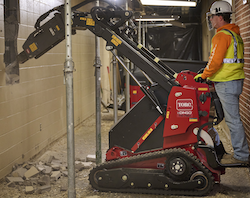
At these early stages of electrification, offering battery-powered equipment will help rental centers stand out over the competition. It can also help your customers win jobs they couldn’t do before, and their success contributes directly to yours. For example, Volvo electric mini excavators are proving to be especially popular on indoor demolition jobs, where the lack of exhaust and greatly reduced noise give contractors a competitive advantage.
If rental centers serve a variety of segments, electric equipment is an especially smart investment. Non-construction segments like landscaping, agriculture and food production are adopting electric equipment faster because the charging setups are simpler. Still, the construction segment will eventually catch up as mobile charging solutions and the infrastructure to support job site electrification evolve.
In terms of ROI, that simpler maintenance and the cost of electricity compared to fuel will offset the higher purchase price faster than most rental center decision makers may think. There’s also the benefit of reduced idling which means renters will likely put fewer unnecessary hours on a machine, helping to extend its life and value.
 |
| Senior Marketing Manager Sam Dando Toro |
Zero emissions from Li-ion power
Battery-powered equipment produces zero engine emissions and reduces noise pollution, making it an attractive solution for contractors working on interior jobsites, catering to emissions regulations or projects in residential areas.
As more essential job site equipment is electrified, such as compact utility loaders and material buggies, the way contractors approach interior demolition is changing. These battery-powered tools complement labor, can help reduce repetitive motion injuries, enhance bid competitiveness through productivity gains, and most importantly, deliver performance without compromise.
Battery-powered equipment eliminates the need for fuel mixing, reduces maintenance requirements and eliminates the hassle of dealing with gas and oil storage and transportation. This not only saves time but also reduces operational costs for both the rental company and the contractor.
Battery-powered equipment has significantly improved in terms of power and performance, allowing contractors to achieve professional results without compromising on efficiency. The versatility, ease of use and quiet operation of battery-powered machines make them an attractive choice for contractors who are increasingly recognizing the benefits of this technology.
Customers want to know if battery-powered equipment will perform like its gas-powered counterparts. With Toro’s battery-powered equipment, customers can trust that the Toro-designed HyperCell battery power system will provide the necessary power and the longevity and endurance required for sustained operation. By leveraging L-ion battery cells with high-energy density, Toro powers equipment that performs impressively, offering professionals a wider range of choices for their operational needs.
The development of Toro’s HyperCell technology was driven by a growing global interest, and in some cases, a necessity, to shift towards alternative power sources. This has led manufacturers to develop battery technology that helps businesses meet noise ordinances and strict engine emission standards. Toro’s battery-powered equipment eliminates engine exhaust emissions, operates quietly and meets evolving legislation requirements.
The expected return on investment (ROI) for battery-powered equipment compared to gas-powered equipment can vary depending on various factors such as the specific equipment, usage patterns, fuel costs and maintenance expenses.
While specific numbers will vary, here are some potential cost savings associated with battery-powered equipment:
Fuel costs Battery-powered equipment eliminates the need for gasoline or diesel fuel, resulting in potential savings on fuel expenses.
Maintenance expenses: When following the guidelines in the operator manual, battery-powered equipment will require less maintenance than similar gas- or diesel-powered equipment. This can lead to savings on oil changes, spark plugs, filters and other maintenance-related costs.
Environmental impact: Battery-powered equipment produces zero engine emissions, contributing to a cleaner environment. Depending on local regulations and incentives, there may be additional savings and benefits associated with using eco-friendly equipment.
Noise reduction: Battery-powered equipment typically operates at a much lower noise level than similar gas- or diesel-powered counterparts, reducing noise pollution and potentially avoiding noise-related fines or restrictions in certain areas
To determine the specific ROI for your situation, consult with a Toro representative who can provide customized analysis based on your specific needs, equipment usage and local factors.
 |
|
Product Manager |
Li-ion can provide a competitive advantage
Li-ion-powered equipment has many unique qualities that make it ideal for the rental market. Unlike diesel or gasoline-powered machines, Li-ion equipment eliminates fuel costs and reduces maintenance with fewer moving parts.
Equipment with Li-ion technology can provide rental centers with a competitive advantage. Many contractors and municipalities now require low-emission equipment, particularly for indoor work, urban environments and on job sites with noise restrictions. With zero emissions and quieter operation, Li-ion machines also expand rental opportunities in applications where traditional equipment may not be permitted. Since rental equipment is often used in less-traditional job site settings, this benefit can particularly important.
For example, Takeuchi currently offers a Li-ion-powered excavator, the TB20e, which is ideal for indoor applications or when working in and around schools, hospitals, residential neighborhoods and food-processing facilities. Lower noise levels also make it easier for operators to communicate with others on the job site for enhanced safety and peace of mind, and zero emissions make it safe to use the TB20e inside structures. All this is particularly important in the rental industry, where some operators may be less experienced with this kind of equipment.
The newest battery-powered equipment can offer excellent performance. The latest Li-ion excavators, like the TB20e, can run up to a full day depending on the system load and the application. They can be charged in four to 10 hours depending on the power source. Some can even operate while tethered. These excavators deliver performance that is on par with their diesel counterparts, provide the same working ranges, and they can operate a wide range of hydraulically driven attachments.
Equipment rental centers are increasingly interested in integrating battery-powered equipment like the TB20e compact excavator into their fleets. However, they often express concerns regarding initial investment, charging logistics, battery performance and equipment durability.
The upfront cost of battery-powered equipment can be higher than diesel-powered machines. To mitigate this, the TB20e is designed to deliver long-term savings by offering lower operating expenses.
Concerns about charging infrastructure and potential downtime are something rental dealers ask about. The TB20e features an onboard charger compatible with 95- to 265-volt single-phase power sources, allowing for flexible charging options. The excavator can be tethered to a power source to extend its runtime.
The robustness of electric equipment in harsh conditions is a valid concern. The TB20e maintains the same performance features and capabilities as its diesel-powered counterparts, ensuring reliability and efficiency in various applications. Its design includes reduced sound and vibration levels, enhancing operator comfort without compromising durability.
As rental centers evaluate the addition of Li-ion-powered equipment, the decision ultimately comes down to return on investment (ROI) and long-term value. While the initial purchase price of electric equipment is higher, the cost savings over time quickly justify the investment. With significantly lower maintenance requirements and durable Li-ion batteries, this equipment can offer lower cost of ownership.
Beyond cost savings, rental centers can capitalize on growing demand for low-emission, quiet equipment. Battery-powered equipment can be ideal for use in urban settings, indoor demolition and job sites with strict environmental or noise regulations. Rental centers that rent out electric excavators can demand premium rates for them. With no fuel, fuel filters, engine oil, engine oil filters, and other maintenance items lead to lower lifetime operating costs and less maintenance.
Rental centers need to get the word out to their customers and let them know that they offer battery-powered equipment, as well as its many benefits. Contractors who rent these quieter, cleaner machines can sometimes even charge higher rates for applications that require their use. They should tell their customers that electric machines deliver the same level of performance of their diesel counterparts and can be run during “off hours” where other machines cannot be due to noise ordinances/restrictions.
Additionally, with increasing regulatory pressure on emissions and sustainability commitments from contractors and municipalities, having Li-ion options in a fleet isn’t just a competitive advantage—it’s becoming a necessity.
 |
|
Energy Solutions Consultant |
Research to find best Li-ion solution
Equipment rental centers are integrating Li-ion-powered equipment into their fleets for several reasons. More companies want to reduce their carbon emissions and convert to electric-powered equipment. Li-ion-powered equipment can often provide the same power and performance as traditional equipment powered by internal combustion engines. Although lead-acid batteries are also a great alternative energy choice, there are fleets that have had difficulties with maintaining these batteries. Li-ion batteries do not require battery watering, have limited maintenance, and have significantly increased battery life, making them an appealing choice for rental fleets.
Safety and electrical infrastructure are often the main concerns that equipment rental centers have regarding Li-ion-powered equipment. These concerns are considered a top priority for Toyota, so Toyota batteries go through a rigorous series of tests, including UL583, which is a safety standard for industrial trucks. Once a Li-ion battery has been approved to the UL2580 and UL2271 testing standard for industrial truck Li-ion batteries, it is then tested with the industrial truck per UL583 to confirm compliance of the entire truck and battery combination.
It is vital for customers to partner with a company, like Toyota, that tests its products working together as a package. Testing a single item does not provide the clarity that package testing offers regarding how the vehicle, charger and battery work safely together.
Rental centers also need to consider their electrical infrastructure when offering equipment powered by Li-ion batteries. Fleets that have traditionally used engines often do not have the power available to install chargers necessary to support the fleet. Those with lead-acid powered fleets may also need to upgrade their electrical infrastructure to support a higher output charger. Toyota Material Handing provides fleet assessments and power studies to determine what kind of battery, charger or electrical requirements are necessary for each fleet to perform optimally.
The performance and return on investment ultimately justify the cost and transition of upgrading a rental fleet to Li-ion-powered equipment. The streamlined maintenance, longevity of the product and performance will often provide a high return on investment with fast results. Operators will also experience increased comfort and ergonomics by eliminating vibrations, noise and odors. Rental center fleets no longer must rely on operators to maintain the batteries.
Li-ion-powered equipment has many advantages for rental fleets, but Toyota prioritizes a fleet assessment for all customers before making the change to Li-ion. Contact your local Toyota dealer for more information about upgrading your rental fleet to lithium-ion powered equipment.
This article also appeared in the May-June 2025 issue of Pro Contractor Rentals magazine. ©2025 Urbain Communications LLC. All rights reserved.

PRO CONTRACTOR RENTALS MAGAZINE



Pro Contractor Rentals provides information of value to rental centers who focus time, resources and attention on meeting the demands of construction contractors and other equipment rental customers.