

Rental Solutions -- Telehandler Attachment Rentals
Solving for the job at hand: In the world of construction, speed, efficiency, and safety mark the difference between success and failure. For equipment rental companies, meeting this need starts with offering high-quality heavy equipment. But having the right attachment is what turns a hard job into an easy one.
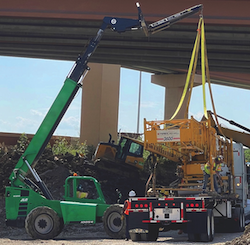 |
| Telehandler Jib attachment. |
|
– Trey Thompson,President, Star Industries |
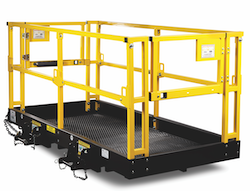 |
| Personnel basket. |
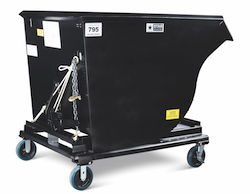 |
| Self-dump bucket attachment. |
 "Star Industries pioneered many of the earliest attachments, with original designs like the safety work platforms and truss booms that are still popular in the market today. As demand has grown for tougher, more adaptable tools, our U.S.-based engineering team has doubled down on innovation. Our approach has been based on customer input from the start. When you listen to the people actually using your products, you learn things no engineering textbook will teach you."
 Telehandlers are a prime example of the power of attachments. According to Star Industries President Trey Thompson, “We’ve made it our mission to not only engineer these attachments to be tougher, safer, and more versatile than ever before, but also to rethink how they solve problems for crews in the field and for the rental branches that serve them.”
Extending the Utility of the Original Telehandler
The first commercially successful telehandlers hit the construction market in the late 1970s to help workers lift and place materials in hard-to-reach areas. Versatility was a key feature, even in early models. The “telescopic forklift” combined features of a forklift, crane, and backhoe in a single machine.
That was just the start. It wasn’t long before engineering and manufacturing teams began designing attachments. By adding booms, buckets, work platforms, and other specialized tools, one machine could now do the work of many.
A telehandler with the right set of attachments is like a Swiss Army knife—preparing construction crews to handle a wide range of tasks.
“Star Industries pioneered many of the earliest attachments, with original designs like the safety work platforms and truss booms that are still popular in the market today.
As demand has grown for tougher, more adaptable tools, our U.S.-based engineering team has doubled down on innovation. Our approach has been based on customer input from the start. When you listen to the people actually using your products, you learn things no engineering textbook will teach you.”
How Can Rental Branches Capture More Telehandler Deals?
Responsiveness, availability, and speed are critical factors in almost every opportunity. Having the right attachment on hand often means the difference between winning a contract or watching the customer walk away to rent from a competitor. Every request for an attachment can be urgent. Besides stocking appropriate inventory on the lot, rental branches need to be able to source additional attachments fast.
“Equipment rental customers and dealers tell us if they have it on the lot when a customer calls, they win the order,” Thompson says. “That’s why we’ve built our business model around availability and speed.”
Through the decades, Star Industries has focused on solving this problem for rental branches. “Our responsiveness isn’t just a service promise; it’s baked into how we run our business. A live person answers the phone. Quotes are sent out in less an hour. Orders are processed within two hours. It’s why we’ve become a preferred vendor for some of the biggest rental companies in the U.S.,” Trey says.
Having high inventory on hand and getting it where it needs to go comes down to proper planning and logistics.
“We have a U.S.-based manufacturing facility for making our highest-demand items and ample stock across product lines. Right now, we’re opening additional warehouse locations in key geographic regions to support even faster delivery.”
Safeguarding Rental Customers on the Job Site
The worst call a rental branch can receive is about an accident involving their equipment—especially one that causes damage, injury, or worse. Every telehandler attachment should be built for stability under load, durability in the field, and ease of use.
- Accurate Load Rating & Compatibility: Attachments are matched to specific telehandler load charts to prevent overloading and reduce tipping or structural failure.
- Secure Attachment Systems: Locking mechanisms are reinforced and tested to keep attachments firmly in place. The Star Quick-Tach system is one example.
- Operator Visibility in Design: Attachments are built with clear sightlines so operators can see loads and surroundings, helping avoid collisions
- “Rental-Tough” Durability: Heavy-duty welds, premium steel, and reinforced stress points minimize failure risks and extend service life. “Everyone knows cheaper and safer don’t usually go together,” says Thompson. “We engineer for OSHA compliance and build in safety features to reduce risk.”
How Telehandler Attachments Impact Rental Revenue
There’s one often-overlooked benefit of having attachments on hand in the rental yard: the more attachments a crew uses on the job, the longer they keep the equipment on rent. Robust inventory opens up more opportunities.
According to Trey, “Star’s most successful rental equipment customers also take the time to teach sales and service teams to ask the right questions and identify more rental opportunities for telehandler attachments. We are always happy to help with that training.”
For rental companies, the value of a telehandler attachment isn’t just in what it can do—it’s in how fast it pays for itself. Popular attachments such as Star’s trash hoppers and grapple buckets can reach full ROI in just a few months. Rental companies often keep them in the fleet for years and then resell them at a fair price.
Trey remarked, “We emphasize durability because we know how much abuse rental equipment takes on the jobsite. When the branch managers we serve are ready to resell one of our attachments, it still has a lot of use left in it. Many of our attachments have a five-year warranty, the longest in the industry, because we build things to last. We’re proud of that.”
This advertorial originally appeared in the September-October 2025 issue of Pro Contractor Rentals magazine ©2025 Urbain Communications LLC. All rights reserved.

PRO CONTRACTOR RENTALS MAGAZINE
Pro Contractor Rentals provides information of value to rental centers who focus time, resources and attention on meeting the demands of construction contractors and other equipment rental customers.