
Equipment Insight -- Telehandlers
Rental centers can cash in on high utilization and ROI by offering machines that best match their customers’ jobs.
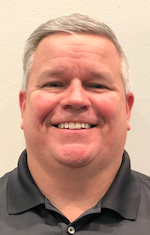 |
| KEVIN COLEMAN Product Specialist Caterpillar |
Consider units with lower maintenance needs
 |
|
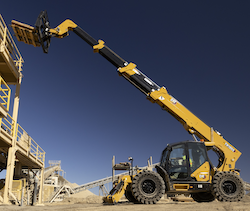
The Next Generation Cat telehandlers have been designed with a focus on lowering maintenance and repair costs by eliminating some items that normally require service, along with significantly extending the intervals for others. |
 |
|
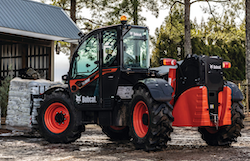
Bobcat telehandler experts recommend that rental companies consider factors such as maintenance requirements and serviceability to ensure their staff can easily maintain their fleet to avoid downtime. |
 |
|
Rental centers can maximize their return by ensuring they have the right capacity and right type of machine in their fleet, based on the demands of their market. That includes having both pick-and-carry and pick-and-place machines. |
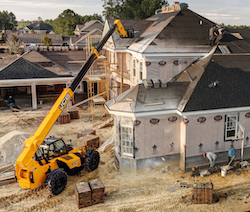 |
| Telehandlers are one of the most in-demand machines on any job site; and one of the most rented. |
 |
|
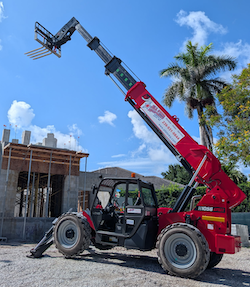
Telehandlers satisfy a diverse range of job site needs, such as unloading trucks, transporting materials, placing material at height, performing farm duties in crop harvesting and feeding, as well as a myriad of other uses. |
 |
| For rental operations, reliable equipment means fewer returns and less time spent trouble-shooting. It translates directly into more time in the field, increased customer satisfaction, and ultimately, more revenue. |
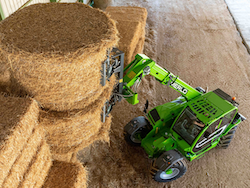 |
| The versatility of telehandlers, especially when paired with attachments, opens multiple revenue streams. A single machine can serve as a forklift in the morning, a bucket loader by noon, and a personnel lift by afternoon all with a swap process that requires minimal tools. |
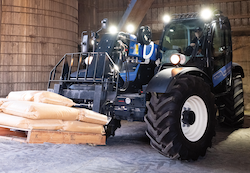 |
| New Holland telehandlers are known for durability and ease of maintenance, which keeps operating costs low and extends the useful life, increasing total ROI. |
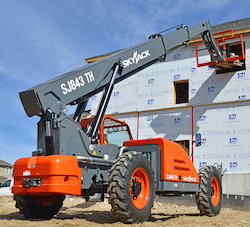 |
| For rental operations, reliable equipment means fewer returns and less time spent troubleshooting. It translates directly into more time in the field, increased customer satisfaction, and ultimately, more revenue. |
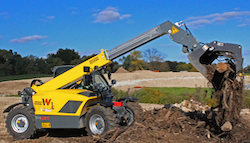 |
| Wacker Neuson’s telehandlers were designed from the beginning to be ground-engaging. With a two-piece boom and low rear pivot point, these telehandlers are designed to dig, push and lift without putting undue stress on the boom. |
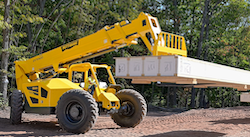 |
| The Extendo 1044X is the first Pettibone model to offer the load status indicator option; it will be available on all Pettibone telehandler models in 2026. |
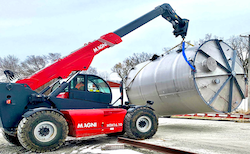 |
| Machines with full LMI (Load Moment Indicator) can be automatic load-limiting, which actively prevents operators from exceeding safe load parameters. |
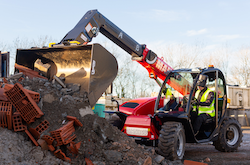 |
| While telehandlers are one of the most common machines in rental fleets, it’s important to get the sizing, features and capabilities right for the local market. |
Rental customers typically prioritize three key factors: safety, user-friendliness and equipment reliability. The Cat TH0642, TH0842, TH1055 and TH1255 telehandlers come standard with safety features that include an operator presence seat switch that disables operation when the seat is unoccupied, a rearview camera for enhanced visibility, and a load stability indicator (LSI) system that provides visual and audible alerts about forward machine stability when handling a load.
An available hydraulic lockout switch disables hydraulic functions when needed, and an optional seat belt reminder system warns the operator if the seat belt is not buckled during operation. All Cat telehandlers feature a pilot-controlled joystick, allowing for smooth multifunction performance along with a tilt steering column for added operator comfort.
Service and maintenance have also been optimized with extended service intervals that reduce downtime and cost. Telematics provide real-time diagnostics, with remote troubleshooting and software flashing capabilities.
One of the biggest challenges for rental centers is the time required to inspect and prep a machine after it returns from its last rental. The Next Generation Cat Telehandlers have made this much faster and easier with extended service intervals for pin greasing (500 hours), boom maintenance (500 hours), along with extended-life engine coolant (6,000 hours) and long-life hydraulic oil (3,000 hours), which can be further extended with fluid sampling and testing. The new telehandlers have also eliminated some items that normally appear on a machine’s maintenance schedule, including maintenance-free axle kingpins, driveshaft U-joints and driveshaft spline.
 |
|
LINDSEY GERHOLD |
Conduct customer research to select models
Customers expect telehandlers that offer greater reach and lifting power without sacrificing maneuverability in tight spaces. Versatility is key.
Recent advances address these needs with features such as multi-attachment compatibility, increased lift capacity and enhanced reach with a telescoping boom.
Operator comfort has also been prioritized, as it directly impacts job site efficiency. Upgrades include fingertip controls for smooth, easy operation; improved cab ergonomics; intuitive controls; and enhanced visibility for a more comfortable, productive experience.
To further boost versatility, Bobcat telehandlers offer five operating modes that meet specific job site demands, whether the goal is reducing fuel consumption, improving responsiveness, enhancing precision or managing engine and travel speeds independently. For example, ECO mode maintains hydraulic performance while reducing engine power, resulting in quieter operation and lower fuel usage.
Rental centers are looking for ways to best serve their customers while simultaneously making decisions that drive ROI. This can sometimes be difficult. With that in mind, rental companies should consider conducting end-user and/or market research (even informally) to better understand the specific needs and preferences of their customers, as well as the demand for compact telehandlers in their target markets.
Rental companies should consider factors such as maintenance requirements and serviceability to ensure their staff can easily maintain their fleet to avoid downtime. Additionally, providing comprehensive training programs and ongoing support to renters can enhance customer satisfaction and ensure efficient use of the equipment.
Telehandlers are a good investment for rental fleets because of their versatility and ability to handle a wide range of applications. For example, Bobcat models come equipped with sought-after features like the smart handling system, boom cushioning and flex drive mode. This is technology that contractors expect for productivity and ease of use. Additionally, Bobcat’s TL519 and TL623 telehandlers are equipped with Power Bob-Tach, which enables select Bobcat attachments to be shared.
For rental centers, ROI comes from maximizing utilization. By understanding the jobs your customers perform and pairing telehandlers with the right attachment packages, rental centers can offer more complete solutions. This increases the machine’s versatility and creates opportunities for incremental rental revenue through attachment add-ons.
 |
|
AMALIJA KOPAC |
Pick-and-place or pick-and-carry?
A couple of trends are driving innovation that have direct benefits for rental centers and their customers. One is a differentiation between high-capacity pick-and-place machines and pick-and-carry machines. Pick-and-carry and pick-and-place machines serve different job site purposes, and differentiation is a great opportunity for rental companies to maximize their ROI while providing customers with productivity benefits.
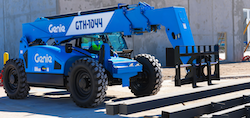
For example, the Genie GTH-1256 pick-and-place telehandler has stabilizers, a maximum capacity of 12,000 pounds and a maximum reach of 56 feet. This machine is a great choice for job sites placing heavy materials at height.
In contrast, the GTH-1244 pick-and-carry telehandler also offers a maximum capacity of 12,000 pounds but does not require stabilizers. With a maximum reach of 44 feet, the GTH-1244 is a lighter machine with best-in-class power-to-weight ratio. It is built for jobs that are primarily pick-and-place tasks where high reach is not needed. Operators save time because they don’t need to deploy stabilizers and equipment owners benefit from the machine’s 74-horsepower engine, which does not need DEF for an overall lower total cost of ownership.
Equipment owners are looking at how much value they can get out of their equipment vs. looking only at the initial purchase price. One way to do this is by making sure models in their fleet are being utilized and are going to be reliable.
Fleet differentiation is a great way rental centers can maximize their utilization by making sure they have the right machine for their customer’s job while maximizing their return on investment.
Genie recently introduced the GTH-1244 telehandler, as well as the 10,000-pound capacity GTH-1044 telehandler. These models give rental companies the ability to garner competitive rates in the 12,000- and 10,000-pound capacity classes and earn faster rental return on invested capital.
Rental centers can maximize their return by ensuring they have the right capacity and right type of machine in their fleet, based on the demands of their market. That includes having both pick-and-carry and pick-and-place machines to match the needs of their market.
The next step is to make sure the machines are quality, reliable telehandlers so that they are available and ready to rent when the customer needs them. Rental centers want hassle-free machines that go on rent and keep working without needing additional service or repairs. Beyond that, Genie makes it easier to expand a rental center telehandler fleet by ensuring parts commonality across the Genie telehandler family. •
 |
| STEPHEN GRANT Product Specialist JCB |
Look for intuitive operation
While today’s telehandlers can be loaded with technology, more isn’t always better. Across models, one of the most significant shifts is toward intuitive operation. Enhanced visibility and ergonomic controls can help even novice operators feel confident quickly. That’s a clear win in rental, where users often vary in experience. JCB telehandlers, for example, feature driver-friendly controls modeled after passenger vehicles and simple in-cab displays that shorten the learning curve and reduce support calls. Advanced options such as rear and side-view cameras and a seatbelt alert beacon are available, although JCB continues to find value in simplicity.
Modern telehandlers often include fleet management systems that track machine usage, location and service intervals. These tools give rental centers real-time data to schedule preventive maintenance and monitor utilization. JCB’s LiveLink telematics can help keep machines running reliably while giving fleet managers a clear view of performance across their rental inventory.
On the maintenance front, improved serviceability reduces downtime between rentals. Features such as ground-level access, grouped service points and extended maintenance intervals help technicians work more efficiently. JCB has prioritized technician-friendly design across its range, making daily checks and routine servicing faster and easier.
Whether it’s a compact model for tight urban sites or a large rotating machine for heavy lifting, today’s telehandlers are more advanced, approachable and reliable than ever – and JCB’s lineup leads that charge with rental-ready features that make a difference on every job.
Telehandlers are one of the most in-demand machines on any job site; and also one of the most rented. Their versatility, reach and lifting power make them indispensable for contractors across construction, industrial and agricultural sectors. For most rental centers, adding telehandlers is less about hesitation and more about smart planning.
Return on investment is always top of the list. To maximize ROI, a telehandler must be reliable, easy to maintain and renter friendly. JCB telehandlers check all those boxes with durable design, intuitive controls that reduce training time and service access points that speed maintenance. That means more uptime between rentals and less time in the shop.
Another real-world concern is security. Telehandlers often sit on job sites overnight or over weekends, making them potential targets for theft. JCB’s LiveLink system can not only track utilization and service intervals, it also provides GPS tracking and geofencing for greater control and peace of mind.
Lastly, rental centers should consider machine flexibility. From compact models for urban environments to rotating units for heavy-duty lifting, having the right mix ensures the ability to meet customer demand without overspending on specialized machines. JCB’s broad lineup helps rental centers tailor their fleet for high utilization and long-term profitability.
From broad job site demand to improved versatility and serviceability, telehandlers are one of the most reliable contributors to fleet ROI. Versatility is a major driver. A single machine that can lift, place, and even grade or dig adds value across more applications. JCB takes this a step further by offering select telehandlers with ground-engaging capabilities – a feature not typically found in this category. That means operators can level surfaces, backfill or move material without bringing in additional equipment. That translates to higher utilization and more opportunities to rent the same machine across multiple job types. •
 |
| JOHN BOEHME Senior Product Manager JLG |
Telehandlers vs. vertical-mast lifts
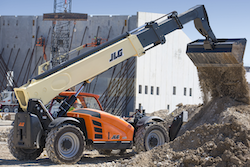
Telehandlers are used to lift, carry and place materials around job sites; however, it is up to the renter of the machine to assure the crews are lifting, placing or carrying materials within the rated capability of the unit.
Because telehandlers have the unique potential to extend materials away from the vehicle with their telescoping booms, JLG offers Load Stability Indication (LSI) on select models to help the operator stay within the longitudinal or forward load capability of the telehandler.
The JLG LSI system is always active, not just when the telehandler is stationary and placing loads. Lowering the boom from a high angle, for example, is a function that may quickly affect the forward stability of the vehicle. JLG’s LSI system considers the stability level, boom extension, boom angle and level of activation requested and determines the appropriate acceleration and speed to execute the boom lower request. The operator still has full control to stop the action at any moment, but the vehicle control system will determine the appropriate deceleration to terminate the boom lower request.
Telehandlers satisfy a diverse range of job site needs, such as unloading trucks, transporting materials, placing material at height, performing farm duties in crop harvesting and feeding, as well as a myriad of other uses. Due to their multi-tool use, owners and operators of JLG telehandlers will find the Load Stability Indication systemhelpful in operating these machines safely.
Rental centers that already offer conventional forklifts in their fleet is may not fully understand why they could also carry telehandlers Some industries use the terms “telehandler” and “forklift” interchangeably, while other renters might be puzzled that the rental center would associate a telehandler – typically used on a construction job site – with a forklift, which they relate to being used in warehouses and yards.
Part of the confusion arises because of the nomenclature used by the U.S. government. In fact, according to OSHA, telehandlers fall into Class VII, aka rough-terrain forklift trucks. (Classes I through VI are variations of powered industrial trucks (ITs) and are generally used indoors.)
Within the Class VII rough-terrain forklift truck category are:
Vertical mast-type forklifts that are “ruggedly constructed” and “designed to be used primarily outdoors.”
Variable reach-type forklifts have telescoping booms, which enables them to pick-and-place loads at various distances and lift heights in front of the machine. This is a subcategory of rough-terrain forklift trucks, which are commonly known as telehandlers.
Truck/trailer-mounted forklifts are portable, self-propelled units typically mounted on carriers to the back of trucks/trailers and used to unload heavy items at job sites. However, not all truck/trailer-mounted forklifts are rough terrain forklifts.
The focus is on rough terrain and these machines can be used outdoors or in an indoor/outdoor environment.
The forklift type sometimes compared to, or confused with, a telehandler is the rough-terrain, vertical mast-type forklift. The primary difference between a telehandler and the Class VII vertical mast-type forklift is the telehandler’s ability to lift up-and-over an obstacle. Vertical mast forklifts only lift vertically. Both types lift comparable amounts of weight, have similar footprints and turning radii and can use attachments, but only telehandlers have a telescoping boom that reaches up and out or up-and-over obstacles. Forklifts are used for picking and carrying material, picking it up and setting it somewhere else. Telehandlers pick, place and carry.
Another way to think about it is the end-use application. Typically, telehandlers are used on construction job sites, whereas vertical-mast type forklifts are mainly used inside and outside of a building post-construction. The telehandler is used during construction of the building, and the forklift is used after the fact. Because it lifts up, out and over things, there’s an extra layer of versatility vs. the vertical mast forklift.
So, while these machines are similar, they are not the same. JLG works to educate rental centers and rental customers on the differences and help them choose JLG and SkyTrak telehandler models that will keep their renters’ productivity high all day long while their business realizes a lower cost of ownership.
Rental centers can rationalize the purchase of this equipment because contractors recognizing the advantages of having a machine with a telescopic boom, which offers greater versatility than alternatives with radial and vertical lift paths, like skid steers, wheel loaders and tractors.
Renting a telehandler means that contractors can perform many tasks such as material handling, truck loading/unloading and operating on rough terrain with one machine that is better suited for space-restricted job sites. For example, trucks still need to be loaded/unloaded on job sites in downtown areas with limited access, and when contractors need to move job site materials from place to place, they need equipment that fits on the road and can maneuver around obstacles.
Additionally, telehandlers provide renters with a cost-efficient solution that doesn’t sacrifice capability, making them an attractive choice for contractors looking to rent equipment that maximizes their productivity and flexibility while keeping their operating costs down. •
 |
| MARK ELTON Director, Product Management LGMG Morth America |
Look for practical tools that enhance maintenance
One of the trends LGMG North America has leveraged in the development of its North American telehandler is a focus on practical tools that enhance day-to-day use for both operators and rental service technicians, rather than flashy add-ons.
One of the most significant upgrades is the large, full-colored display in the cab. It provides operators and technicians with real-time error messages, system diagnostics and live feedback from sensors. That helps field teams quickly identify issues, reduces troubleshooting time and increases the machine’s uptime.
The screen also includes built-in load charts rather than relying solely on paper charts, That means if the paper chart goes missing or gets damaged, crews can still access what they need.
There’s been movement across the industry toward flexible telematics. LGMG units come ready for plug-and-play installations, allowing rental centers to use their preferred tracking systems. This provides owners with the option to view insights into their fleet’s activity without being tied to one brand of software.
Another technological improvement in the marketplace is the emergence of alternative fuel models and shorter-reach variants that cater to more specific needs. While those options have their place, most rental operations are seeking tools that enhance uptime, streamline service and simplify life for their customers.
Rental companies typically prioritize three key factors when selecting telehandlers: reliability, ease of service and upfront cost. For reliability, LGMG telehandlers are built with well-known components, including Cummins engines, ZF transmissions and Dana axles. LGMG NA also made sturdier design additions, such as using a steel engine cover instead of plastic. It’s tougher and easier to repair.
Serviceability is a big draw of LGMG telehandlers. The in-cab screen displays easy-to-read fault codes and sensor data, helping technicians diagnose problems more quickly. LGMG NA’s three-year warranty covers defects in material and workmanship and an optional two-year extension adds even more peace of mind.
Some independent rental centers can’t justify the price of larger machines. That’s where LGMG NA has been able to help with pricing that offers smaller rental companies a valuable opportunity. Some LGMG customers report the LGMG 10K telehandler is the first telehandler in that class they could afford, allowing them to grow their fleets.
However, ROI depends on more than just sticker price. It comes down to how much revenue the machine brings in, how often it’s rented and how much it costs to maintain.
LGMG machines are priced to offer real value upfront, especially for rental companies looking to break into or expand in the 10K telehandler class. Adding a three-year warranty also results in lower operating costs.
Flexibility also plays a big role in LGMG telehandlers. With a wide range of available attachments, the machine can handle a greater variety of jobs and serve a broader range of customer types. That boosts utilization and shortens the time it takes to earn back the investment. •
 |
| COLE RENKEN General Manager Merlo America |
Telehandlers drive rental ROI
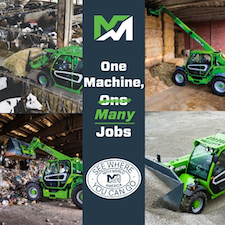
On modern job sites, versatility isn’t a luxury, it’s a necessity. Rental centers need equipment that can adapt to any task, and operators need machines that are intuitive and consistent. The latest generation of Merlo telehandlers is engineered around this reality. With unmatched adaptability and platform-wide consistency, Merlo machines are designed to be one machine for many jobs, saving time, training hours and operational costs for both rental houses and their customers.
One of the biggest advances in Merlo equipment is its attachment recognition system, which automatically detects the mounted tool and adjusts load charts and performance settings accordingly. This ensures safe lifting and streamlines setup for renters who may not be familiar with specific attachments. Paired with Merlo’s Adaptive Stability Control System (ASCS) that actively monitors machine stability, digitized control systems and intuitive capacitive joysticks, operators experience smoother, safer movements and faster task completion regardless of skill level.
What sets Merlo apart even further is its standardized cab design across platforms. Whether a renter is stepping into a compact P27.6 or a heavy-duty forestry machine, the control layout remains the same. That means fewer training headaches for rental centers and more confidence for end users.
Rental companies often hesitate to invest in telehandlers due to common concerns such as operator learning curves, fear of underutilization and the burden of maintaining model-specific machines. Merlo addresses these concerns head-on.
Learning curve: Merlo’s standardized cab configurations eliminate the need to retrain operators with every machine swap. This means one Merlo platform provides familiar controls across the line.
Utilization: The versatility of Merlo equipment, especially when paired with attachments, opens multiple revenue streams. A single machine can serve as a forklift in the morning, a bucket loader by noon and a personnel lift by afternoon all with a swap process that requires minimal tools.
Maintenance simplicity: Common parts across platforms and straightforward service access points mean that rental center technicians can reduce machine downtime and parts inventory costs.
When assessing return on investment, Merlo telehandlers stand out by doing more with less: less time on the lot, less downtime, less training and fewer machines needed to serve more applications.
Instead of buying multiple single-purpose machines, rental centers can purchase one Merlo platform and outfit it with attachments for a broad array of jobs: forks, buckets, winches, sweepers, baskets and more. This flexibility leads to higher utilization rates and more frequent bookings.
Additionally, Merlo’s compact design and tight turning radius allow these machines to navigate confined spaces such as urban construction zones, dense agricultural fields, or forested terrain better than traditional forklifts or skid steers. That adaptability increases a rental center’s customer base while reducing the need for multiple machine types in a rental fleet.
To complete the picture, rental centers can leverage the MerloMobility telematics platform. It provides real-time data on machine diagnostics and usage, giving managers a clear and accurate understanding of the Total Cost of Ownership (TCO) for each asset in their fleet.
Merlo telehandlers aren’t just a piece of equipment, they’re a revenue-generating platform. With advanced technology like attachment recognition, smart safety systems, and cab consistency, Merlo empowers rental centers to simplify operations, maximize uptime and serve more customers with fewer machines. •
 |
| LENA PATTON Product Marketing Manager New Holland North America |
Advances protect operators and equipment
Two simple yet valuable improvements to telehandlers include telematics and rear-view cameras. These offer real, measurable benefits to rental centers and their customers. For rental centers, telematics provides visibility into machine usage, location and maintenance needs, helping them manage fleets more efficiently, prevent downtime and plan service proactively. It also adds accountability by showing how and when equipment is used. For customers, rear-view cameras enhance safety and visibility on busy or confined job sites.
The two main concerns for rental centers are serviceability and ease of use for customers. Uptime is a critical factor; rental centers can’t afford delays due to complex maintenance or hard-to-find parts. New Holland focuses on durable designs and easy access to service points to reduce downtime, and with its nationwide parts network and the New Holland dealer support network, help is always close by. To make operating simpler and safer, advanced hydraulic functions such as preset boom height limits boom ensure operators can work more confidently and safely without overextending the machine in tight or height-restricted areas. It reduces the learning curve, minimizes the risk of operator error and helps protect both the equipment and the job site. For rental centers, that means fewer support calls, less wear and tear and a better experience that keeps customers coming back.
For telehandlers specifically, rental centers can rationalize the purchase of these units because the equipment is designed for high utilization across multiple customer segments. These units can be rented out frequently and that high demand translates to faster payback periods. Additionally, New Holland Telehandlers are known for durability and ease of maintenance, which keeps operating costs low and extends the useful life, increasing total ROI. •
 |
| COREY CONNOLLY Senior Product Manager Skyjack |
Telehandlers increast rental customer utilization
Skyjack’s TH series of telehandlers serve the rental industry with world-renowned durability, quality and serviceability. Proven, reliable designs in Skyjack telehandlers offer features and attachments that increase customer utilization and limit downtime.
Skyjack offers six updated models in the North American telehandler series, with lift capacities ranging from 5,500 to 12,000 pounds and lift heights ranging from 19 feet 1 inch to 56 feet 3 inches. Maximum forward reach ranges from 11 feet 1 inch to 42 feet 4 inches. They support customers as they work at height, move cargo in tight spaces and navigate rough terrain.
The FlexCab, a standard feature of Skyjack’s telehandlers, gives fleet operators increased flexibility and allows for easy conversion between open and enclosed cabs with simple hand tools. The bolt-on/bolt-off window retention system with easily sourced flat glass panels ensures minimal ownership costs and downtime. Skyjack’s compact SJ519 TH telehandler further redefines the market with class-leading cab size. Through the use of improved gearing and high-efficiency hydraulics, this 74-horsepower telehandler delivers the same on-site job performance as higher horsepower units. The series offers SmartTorque, which doesn’t require DPF, DEF or other active exhaust aftertreatment, and a unique Rear Axle Stabilization (RAS) system increases stability and provides job site flexibility with three-mode steering operation. The FlexDrive option allows operators to reduce drive speed and creep forward and reverse while maintaining all function and hydraulic performance required to complete a job. Skyjack telehandlers also feature a single multifunction pilot-operated joystick control.
The yoke-mounted ReadyHook is standard on most TH Series telehandlers, which allows safe under-slinging of loads that match the maximum lift capability and help avoid the practice of using the forks as an underslung lifting device.
Skyjack supports the rental industry with a wide variety of carriages, fork options and attachments designed to increase telehandler productivity to help customers tackle ever-changing jobsites.
All major service points are easily accessible and the SkyCoded colored and numbered wiring system offers easy troubleshooting and maintenance. The proven relay-based control system allows Skyjack telehandlers to operate with simpler components, which needs less maintenance and lowers costs.
The free, smartphone-accessible Elevate Live customer support QR code technology is another easy access point to machine-specific information and service data. Customers get actionable insights to make their business more efficient. Skyjack has worked with customers to identify and provide the most important data points that solve day-to-day service needs. Elevate delivers machine-specific alerts and analysis which can dramatically reduce unnecessary service calls and trips to job sites.
Skyjack’s TH Series has recently been updated to increase machine reliability and longevity, while continuing to offer best-in-class serviceability. A new dual-tilt compensation cylinder design improves load distribution and reliability. The series features new maintenance-free main bearings, a relocated electronic control unit has easier service access, and a new high-pressure filter system and improved hydraulic tank design significantly reduces contamination. Customers will also benefit from the new durable and rental yard-repairable steel engine cowling and new ergonomic seat with improved weather protection. •
 |
| JAY QUATRO Commercial Product Manager Wacker Neuson |
Consider machines that can dig, load and carry
Safety is a big factor when operating a telehandler. OSHA is strict with licensing and regulations. To ensure the operator keeps the load within a safe working envelope at all times, load charts are required to be in every telehandler.
Wacker Neuson has developed a load management system (LMS) that simplifies the use of a traditional load chart. This technology alerts the operator with lights and alarms if the load exceeds the weight limit of the machine at any point during the lift cycle. If the warnings are ignored, the system will lock out the boom until the load is returned to a safe operating position.
This system, which is standard on Wacker Neuson telehandlers, offers rental houses a simple way to ensure that customers operate telehandlers safely.
Wacker Neuson currently offers two telehandlers in the United States: the TH412 and TH627. These versatile machines feature a single joystick with all boom and hydraulic functions. This allows the operator to keep one hand on the steering wheel and one hand on the joystick at all times, simplifying operation and increasing safety.
With transportation and job site costs continue to escalate, rental customers are looking for a single machine to do the work of many. Historically, telehandlers have been seen as only a pick-and-place tool, primarily for tasks requiring elevation.
Wacker Neuson’s telehandlers were designed from the beginning to be ground-engaging. Through the use of a two-piece boom and low rear pivot point, they are designed to dig, push and lift without putting undue stress on the boom. Taking versatility even further, a universal attachment plate and auxiliary hydraulics enable these machines to run skid steer and wheel loader attachments.
In a rental fleet, ROI is directly tied to equipment utilization. The higher the annual utilization percentage, the faster a rental center will earn back its investment and make a profit. Having one machine that can dig and carry like a wheel loader, use a variety of attachments like a skid steer and provide the lifting capabilities of a telehandler assists with utilization.
With a ground-engaging telehandler from Wacker Neuson, rental centers can think outside the box when looking for opportunities. Instead of waiting until the building shell phase to rent a machine with forks, a rental center can send that same telehandler out on rent months earlier in the project with a bucket, forks, grapple and broom. That gives the contractor a reason to keep that machine on rent long term.
Seasonality is another consideration. During peak construction season in the northern parts of the United States, equipment utilization can be high. However, in winter months, this can drop significantly, leaving telehandlers unrented. Renting a ground-engaging telehandler that can accomplish wheel loader tasks can dramatically increase annual utilization. They make excellent snow removal machines, taking advantage of both power and the extra reach and height of the boom. •
 |
|
TIM PALOSAARI |
New models, new capabilities
Pettibone recently added the Extendo 1044X telehandler, a 10,000-pound lift capacity machine. Without outriggers, it offers faster setup times and improved maneuverability, and it also reduces maintenance and costs yet provides exceptional lifting performance that compares favorably with models with outriggers.
An option gaining traction is a load status indicator. Audible or visual alarms will alert the operator if they’re approaching an unsafe/unstable load condition. The Extendo 1044X is the first Pettibone model to offer this option and will be available on all Pettibone telehandlers in 2026.
Offering the best product at a low cost of ownership is always Pettibone’s goal, but a higher purchase price can be justifiable when examining quality and long-term cost-effectiveness.
Rental centers look for machines that deliver the best ROI. Maintenance, fuel efficiency and repairs are all factors when deciding which telehandler to purchase. Even the highest quality machines require regular service but making that maintenance faster and easier keeps utilization and profitability high.
Pettibone X-Series telehandlers feature a side-mounted engine that offers easy accessibility for daily service.
Taking advantage of telematics software is another way to increase equipment ROI. Rental owners can access readily available data for basic information like equipment location. Telematics also help identify issues so items can be addressed before they become problems.
Some issues can be quickly diagnosed using the telematics dashboard on a computer or smartphone app. This is particularly beneficial when a telehandler is on a remote job site. Field technicians can learn more information about the problem before they arrive. Depending on the affected components, telematics can determine the exact part number that needs replacing. Techs can then make sure they have the necessary part before going to the site.
Even experienced rental customers aren’t familiar with every telehandler brand or model, so operator errors that lead to costly breakdowns are possible. Telematics can send alerts to help ensure customer uptime and telehandler health.
Pettibone’s X-Command telematics program is standard for two years on X-Series Extendo and Traverse telehandlers. It allows owners to look at current equipment data and generate reports that can assist with fleet maintenance.
Operator visibility is critical to safety. Some telehandlers are touted as having excellent visibility from the cab, but seemingly clear sightlines can vanish once the machine is put into a real working condition. Pettibone’s chassis and boom structures provide visibility in all directions around the machine. An optional rear-view camera system is also available..
Pettibone telehandler have an exclusive horizontally sliding boom. Traverse models offer up to 70 inches of traversing boom travel. •
 |
| GARY WEISMAN COO Magni America |
Technology improves safetyt, efficiency and customer satisfaction
As rental centers evaluate fleet additions, telehandlers stand out for their versatility, safety, and profit potential. Magni aims to lead in innovation and to make it easy for rental centers to justify and successfully deploy this equipment.
Technological advances deliver value, and Magni telehandlers TH and HTH fixed boom and RTH rotating telehandlers offer cutting-edge safety and performance features that benefit rental companies and end users.
Most notably, Magni machines feature full LMI (Load Moment Indicator) with automatic load limiting. This system actively prevents operators from exceeding safe load parameters. Magni units have multi-position stabilizers, a unique cab design with 360-degree visibility and an advanced touchscreen control system that provides easy diagnostics, operator guidance and service access. Every machine has MagniConnect telematics that gives remote visibility of equipment utilization, location and service needs. This maximizes uptime and reduces operating costs.
Additionally, the Magni Assist QR-code sticker system offers instant access to operator videos, manuals and troubleshooting guides, supporting rental centers with scalable, field-ready training tools that reduce support calls and speed adoption.
This technology reduces accidents, improves job site efficiency and enhances customer satisfaction, helping rental centers increase rentals with fewer issues.
When rental centers hesitate to add Magni telehandlers, especially rotating models, it usually comes down to three concerns: complexity, cost, and support.
Complexity: Rotating telehandlers are still unfamiliar to many U.S. operators and Magni’s solution is comprehensive and scalable training, providing on-site instruction’ and virtual training and materials that make even advanced features easy to understand. Magni machines are intuitive. Once operators use them, they don’t want to go back. With Magni, different does not mean difficult!
Cost: Magni equipment is competitively priced but offers premium features and benefits. Rental centers get a longer service life, greater versatility and far fewer job site incidents due to Magni’s safety technology. Many rental customers now demand these features.
Support: Rental companies need confidence that the manufacturer stands behind the machine. Magni America is factory-owned with a nationwide support network, a U.S.-based parts operation and a dedicated technical support team. The Magni team works closely with rental centers to train, support and ensure adoption – not just sell a machine.
Rental centers are in the business of ROI and Magni machines deliver in multiple ways:
Higher rental rates: With higher lift capacities, better reach and more safety features, Magni telehandlers command premium rates.
Versatility across applications: One machine can replace several units, which is especially true for RTH models that can perform as cranes, aerial platforms and traditional telehandlers.
Reduced downtime: Fewer accidents and maintenance calls due to Magni’s safety and diagnostics systems.
Residual value: Magni machines hold their value due to manufacturing quality and global demand.
Contractors increasingly recognize the operational savings of using smarter equipment. Rental centers that offer Magni telehandlers are winning that business and creating long-term repeat customers. They enjoy the ability to provide a differentiated product that has huge value vs. a commodity that results in a race to the bottom on pricing. •
 |
| STEVE KISKUNAS Product Manager, Telehandlers Manitou |
Focus on utilization, performance and low TCO
Manitou has been focused on the rental telehandler business, and three elements have been key to Manitou’s recent telehandler introductions:
Utilization: This remains a key driver for all rental businesses. Even as equipment rental remains strong, a robust utilization rate is still important to ensure profitability. One way Manitou has ensured a boost in utilization is with the launch of the MTA 519 telehandler specifically for the rental market. It features a skid steer coupler for attachments, which allows use of skid steer attachments on these machines.
Driving efficiency and performance: The MTA 1242 MAX 74 models introduced in 2025 improve on lift capacities in common working ranges for rental equipment. With integrated outriggers and a less-complex 74 horsepower engine, emissions technology isn’t required.
Close focus on total cost of ownership (TCO). These machines offer innovative design and service points, machine connectivity, extended service intervals and other changes that increase profitability.
While telehandlers are one of the most common machines in rental fleets, it’s important to get the sizing, features and capabilities right for the local market. That includes having the right attachments and value-added options available. A machine specified in a way that will not appeal to local renters will result in low rental/utilization and ROI will suffer, so it’s important to be in tune with local rental demand. Is it mostly residential/one- to two-story buildings, or is it more commercial construction where customers need to reach the third or fourth floor? Selecting the right machine will help rental centers dial into the right combination of investment and utilization.
Manitou continues to focus on being an end-to-end partner that caters to the needs of the rental market, from specialized financing to marketing support, to pencil-sharp lower TCO benefits and integration/support from dealers. Manitou dealers understand how new equipment sales and rental work together in a mutually beneficial way.
Recently, rationalizing equipment purchases based on ROI and other factors has been challenging. It’s an odd year where confidence in capital investment has not manifested itself as many thought it would be due to many obvious market impacts. The rental market benefits from this uncertainty.
As contractors pull back on capital expenditures, they tend to rely more on rental, whether as a replacement or as a stand-in for a machine in their fleet that doesn’t have the capabilities of newer models. The industry as a whole remains strong and the backlog of work is relatively unchanged. While the demand for rental equipment is not growing at the same pace as it did just a few years ago, it is still growing at a pace that makes sense for the expansion of the market and the addition of resources to serve it.
This article originally appeared in the September-October 2025 issue of Pro Contractor Rentals magazine ©2025 Urbain Communications LLC. All rights reserved.

PRO CONTRACTOR RENTALS MAGAZINE
Pro Contractor Rentals provides information of value to rental centers who focus time, resources and attention on meeting the demands of construction contractors and other equipment rental customers.